
Flat Roof Leak Thermal Imaging for Water Ingress
Flat roof thermal imaging surveys that map where water has got into the roof, certified by a Level 3 thermographer.
When a flat roof leaks, the water rarely appears directly below the defect. It travels through the insulation and along the deck, soaking a far larger area than the stain on the ceiling suggests. Replacing the whole roof to be safe is expensive, and patching the wrong place does not stop the leak, so the first question is always how far the water has gone.
A flat roof moisture survey maps the areas consistent with trapped moisture without cutting into the roof. Thermography Services (UK) analyses every image at Level 3 and sets out the findings in a certified report, so further checks and any work can be aimed where the evidence points.
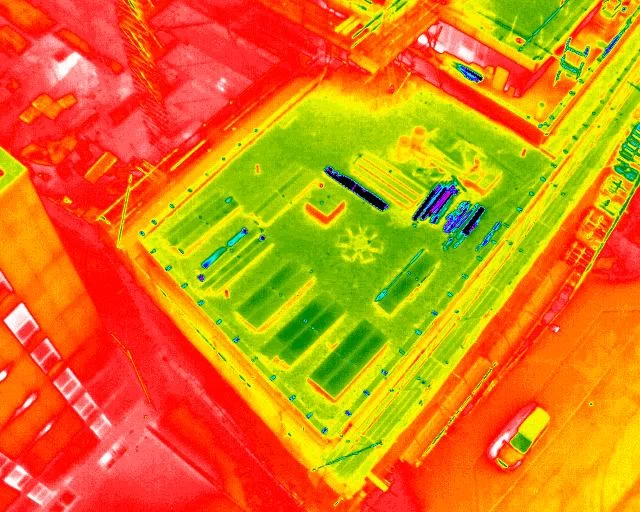
Find where water has got into your flat roof, without cutting it open.
A flat roof can leak for months before anyone notices. By the time a stain appears on a ceiling, water may have spread through a wide area of insulation, well away from where it got in, and nobody can tell how far from above or below.
Flat roof leak thermal imaging works because wet insulation behaves differently from dry insulation. During a sunny day the whole roof absorbs heat. After sunset, dry areas cool quickly, but wet areas hold their heat for hours, because the water trapped in the insulation is slow to give it up. In the first hours after dark, a thermal camera sees those wet areas as warm patches against a cooler, dry roof, often with shapes that follow the falls, the seams and the upstands. The survey is timed for a clear, calm evening after a day of sun, because cloud, wind and rain all flatten the pattern. Rooftop plant, flues, ballast, standing water and warm rooms below the deck can also produce warm patches that are not moisture, so every thermal image is matched by a visual photograph and the roof is walked over or viewed in daylight to record what is physically there.
Our Level 3 thermographer then separates likely moisture from everything else, maps each area consistent with trapped moisture and classifies it. The certified report gives your roofing contractor or building surveyor a marked-up plan of where to verify, by core sampling or moisture testing, so any area that is opened up is chosen by evidence rather than guesswork, and the scale of the problem is understood before any decision is made.
Flat roof thermal imaging surveys that map where water has got into the roof, certified by a Level 3 thermographer.
Page Subjects
flat roof leak thermal imaging, flat roof moisture survey, water ingress thermal survey, roof leak detection thermography, roof thermal imaging survey



Page Tags
flat roof survey, roof moisture, water ingress, roof leak detection, thermal imaging, building thermography
Request a Flat Roof Survey Quotation
Every roof is different, so every flat roof survey is scoped to the roof area, its build-up, access and the question you need answered. Tell us about the building, the type of roof if you know it, where leaks or stains have appeared and any repair history, and we will come back with a clear proposal and a quotation for the work, including a survey window chosen for the weather conditions the method depends on.

How water hides in roofs
Reading Moisture in Flat Roofs
A flat roof is built in layers: a waterproof membrane on top, insulation beneath it and a structural deck below that. Each layer depends on the one above it staying dry.
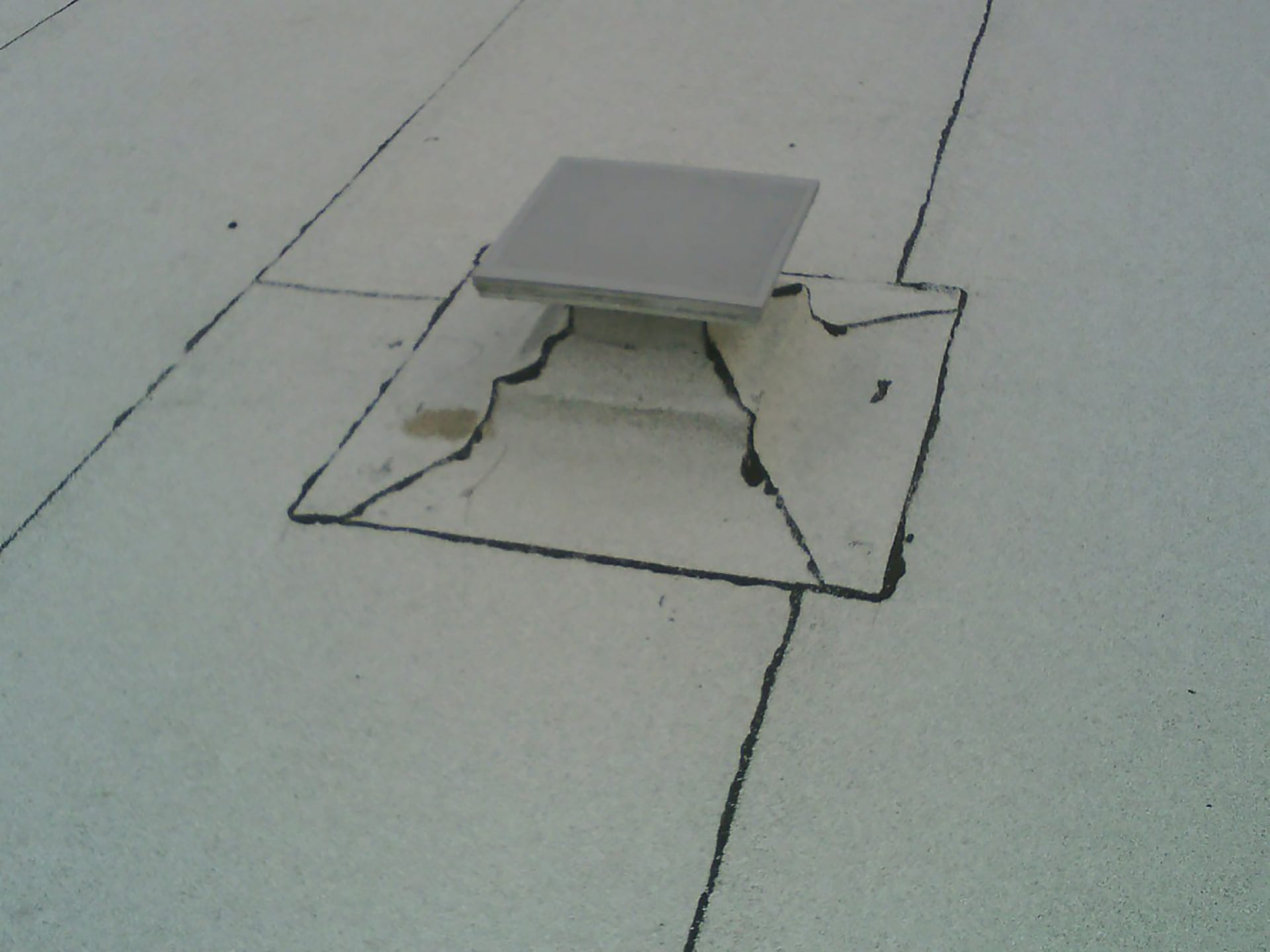
When the membrane fails, at a seam, an upstand, a penetration or a split, water finds its way into the insulation and stays there. Some insulation soaks it up; some lets it run along the top of the deck to the lowest point. Either way the wet area can grow for a long time without showing inside, and when it does show, the stain on the ceiling may be some distance from the defect that caused it. Repairs made directly above the stain often miss the real entry point, which is why leaks so often seem to return.
Wet insulation stores far more heat than dry insulation.
That single fact is what makes a roof thermal imaging survey possible. On a sunny day the roof warms right through. As the sky darkens and the air cools, dry areas lose their heat quickly, while wet areas stay warm for hours. A thermal camera shows the difference clearly, and the outline of a warm area often tells its own story: a patch spreading from an outlet, a line along a seam, a ring around a rooflight.
Not every warm patch is water. Ballast and gravel hold heat, standing water behaves differently from water inside the roof, plant and flues give off heat, and a warm kitchen or plant room below the deck can show through. Reflective foil facings, green roofs and inverted roofs, where the insulation sits above the membrane, limit what the method can see, and the report says so where it applies.
Telling these apart is the work of the analysis, so every finding is described as consistent with trapped moisture until it has been verified.
Related Building Thermography Services
How a roof survey works
Timing, Access and the Report
A flat roof moisture survey depends on the weather more than most surveys do. It is planned for the first hours after dark following a dry, sunny day, with a clear sky and little wind, and the forecast is checked again before the survey goes ahead. If the conditions are not right, the survey is moved rather than carried out on a roof that cannot show its pattern.
Imaging is carried out from a safe elevated position agreed with you beforehand, with any access arrangements, permits and site rules confirmed before the evening of the survey. Where a roof is best captured from the air, drone thermography is provided by Drone Media Imaging, and the imagery can then be analysed and certified here.
Each area consistent with trapped moisture is mapped, compared with the dry roof around it and classified. Visual photographs match every thermal image, and rooftop features are recorded so they are not mistaken for moisture.
The certified report sets out the conditions, the coverage, every mapped area and its limitations, with a marked-up plan your contractor can take onto the roof to verify the findings, and a dated record of the roof’s condition to compare against after any work.
Case Study
Water Ingress Survey of a Commercial Flat Roof
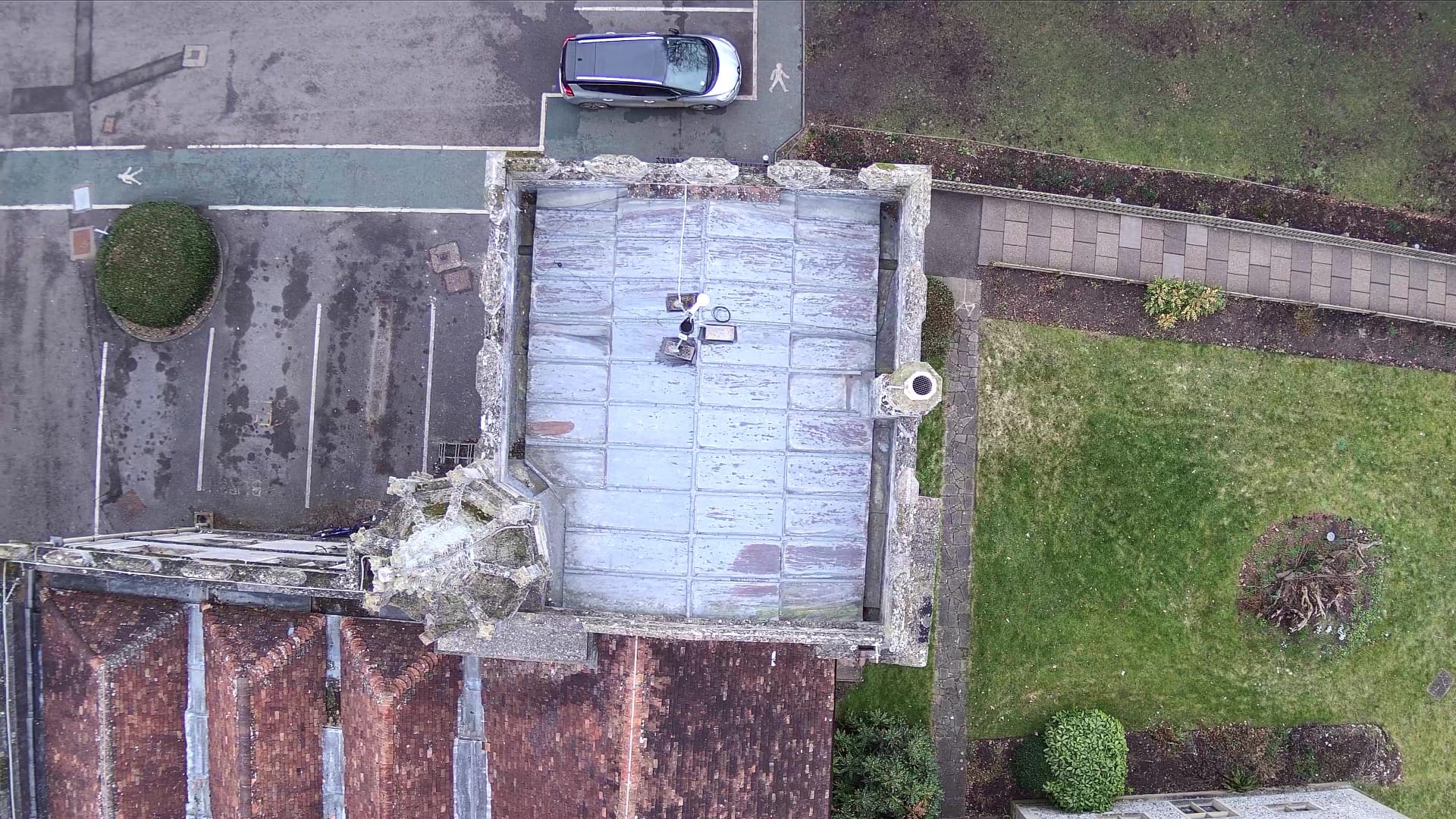
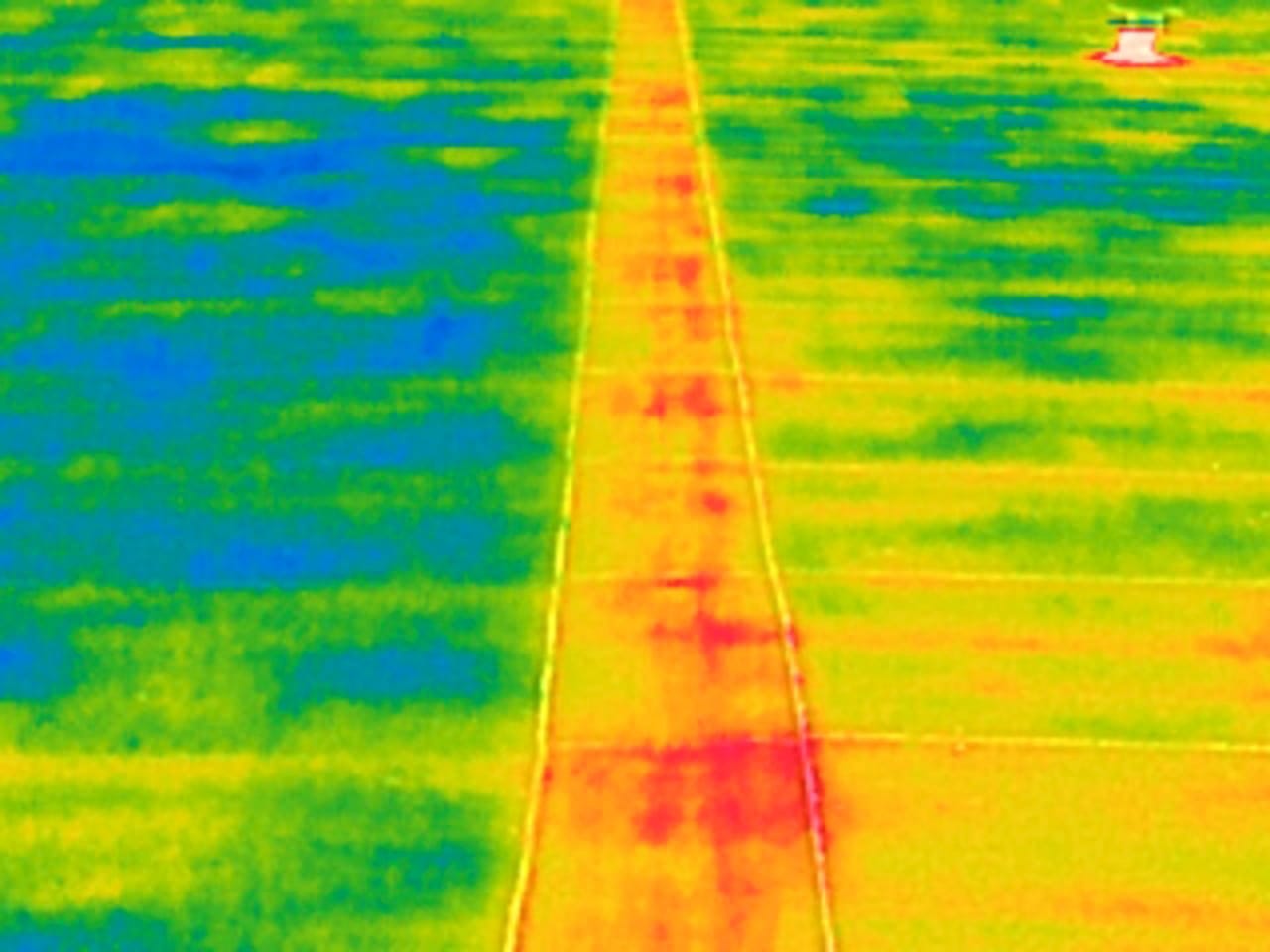
A Level 3 thermographic survey of a commercial flat roof with suspected water ingress, carried out at dusk to capture the way the roof gave up its heat. Warm areas localised at seams, upstands and penetrations were consistent with possible trapped moisture or unbonded membrane, running about 3 to 7 °C warmer than the surrounding dry roof. Each area was mapped and referenced for verification by moisture testing or core sampling. There was no evidence of widespread saturation, and the certified report set out maintenance priorities for the client.
Standards and Certification
Thermographic inspection, analysis and reporting are carried out by a Thermography Services (UK) ITC Level III Certified Master Thermographer (Infrared Training Centre; Certification #205722059), practising in accordance with the frameworks of ISO 18436-7:2014, ASNT SNT-TC-1A and ANSI/ASNT CP-105, and BINDT CMGEN Appendix B (UK training governance). Inspection methodology is aligned with IEC 62446-3:2017 (solar PV) and BS EN ISO 6781-1:2023 (building envelopes) as applicable.
Flat Roof Moisture Surveys
What a flat roof moisture survey covers
A flat roof moisture survey covers the whole roof area, not just the part above the stain: the field of the roof, seams and laps, upstands and parapets, outlets and gutters, rooflights, plant bases and every penetration through the membrane. The roof build-up, its drainage layout and any known leak or repair history are gathered before the survey, because they change how each pattern is read. The scope is agreed in advance, so the report covers the roof areas that matter to the decision you need to make. Where only part of a large roof is suspect, the survey can still record the whole roof, because a second wet area found early costs far less to deal with than one found later.
Roof leak detection thermography is used on offices, schools, warehouses, retail units, blocks of flats and other buildings with flat or low-pitch roofs. A commercial roof water ingress investigation often comes before a choice between local repair, overlay and replacement, and the extent of wet insulation is one of the most important facts in that choice. Thermal imaging for roof leaks is also useful after work has been done, or before a building changes hands, to check that a repaired area is drying out and that the leak has not simply moved.
The cost of a flat roof thermal imaging survey depends on the size and complexity of the roof, access and how the imagery is captured, which is why every survey is quoted on its scope rather than from a price list. A clear description of the roof and the problem is usually enough to give an accurate quotation, and a site visit can be arranged where the roof is large or complex.
Water ingress thermal surveys with Level 3 analysis
A water ingress thermal survey is only as useful as the reading of it. Every survey is analysed by our Level 3 thermographer, who separates likely moisture from ballast, ponding, plant and heat from below, classifies each mapped area and states how confident the analysis is. Where a team already captures its own roof imagery, from the ground or from the air, the same Level 3 analysis and certified reporting can be applied to that data. Facilities teams and roofing contractors use this to get a defensible reading of imagery they already hold, without paying for a second survey.
Thermography is a qualitative, comparative assessment of surface temperatures under the conditions at the time of the survey. It identifies areas consistent with trapped moisture; it does not measure moisture content, and every finding should be verified by core sampling or moisture testing before work is specified. The report shows where to verify; the choice of any repair is for your roofing contractor or building surveyor.
Flat roof surveys are carried out across Sussex, Surrey, Kent, Hampshire, Berkshire and London, including Crawley, Horsham, Brighton, Guildford, Croydon, Maidstone, Basingstoke, Southampton, Slough and Reading, and across the UK on request.
Roof Survey Method and Limits
The standard behind it
Flat roof surveys follow a method aligned with BS EN ISO 6781-1:2023, Performance of buildings, Detection of heat, air and moisture irregularities in buildings by infrared methods, Part 1: General procedures, the current standard for building thermography. It covers moisture irregularities alongside heat and air, and frames how a survey is planned and how its conditions, reference temperatures and findings are recorded.
For a flat roof, that means a survey timed to the way the roof cools after a day of sun, recorded weather and surface conditions, matched visual images and a clear statement of what the method could not see. The method is qualitative: it identifies areas consistent with trapped moisture and relies on intrusive verification, such as core sampling or moisture testing, to confirm them. The report keeps each observation separate from its interpretation.

Request a Flat Roof Survey Quotation
Every roof is different, so every flat roof survey is scoped to the roof area, its build-up, access and the question you need answered. Tell us about the building, the type of roof if you know it, where leaks or stains have appeared and any repair history, and we will come back with a clear proposal and a quotation for the work, including a survey window chosen for the weather conditions the method depends on.


