
Electrical Thermal Imaging and Thermographic Inspection Services
Certified thermal imaging for electrical systems, from switchgear to final circuits, analysed and reported by a Level 3 thermographer.
Electrical thermal imaging records the surface temperature of an installation while it is working, so connections, devices and conductors that are running hotter than they should can be seen without switching anything off. It is one of the most effective ways to find developing electrical problems before they lead to failure, downtime or fire.
Thermography Services (UK) carries out electrical thermographic inspection for commercial, industrial and public sector sites. Every image is analysed, classified by severity and consequence, and explained in a certified report written by our Level 3 thermographer, so your electrical contractor knows exactly where to look first.
Electrical Thermography
See the heat inside your electrical installation, and know exactly what it means.
Electrical installations rarely fail without warning, but the warning is usually heat, and heat is invisible. A loose termination, an overloaded cable, an unbalanced supply or a protective device under strain will run warmer than it should, sometimes for months, while the installation looks and sounds entirely normal. Nobody notices until there is a trip, a smell or visible damage. By then the chance to deal with it calmly, at a time that suits the business, has often gone. Most of these conditions develop slowly, which is exactly why a regular survey is worth having.
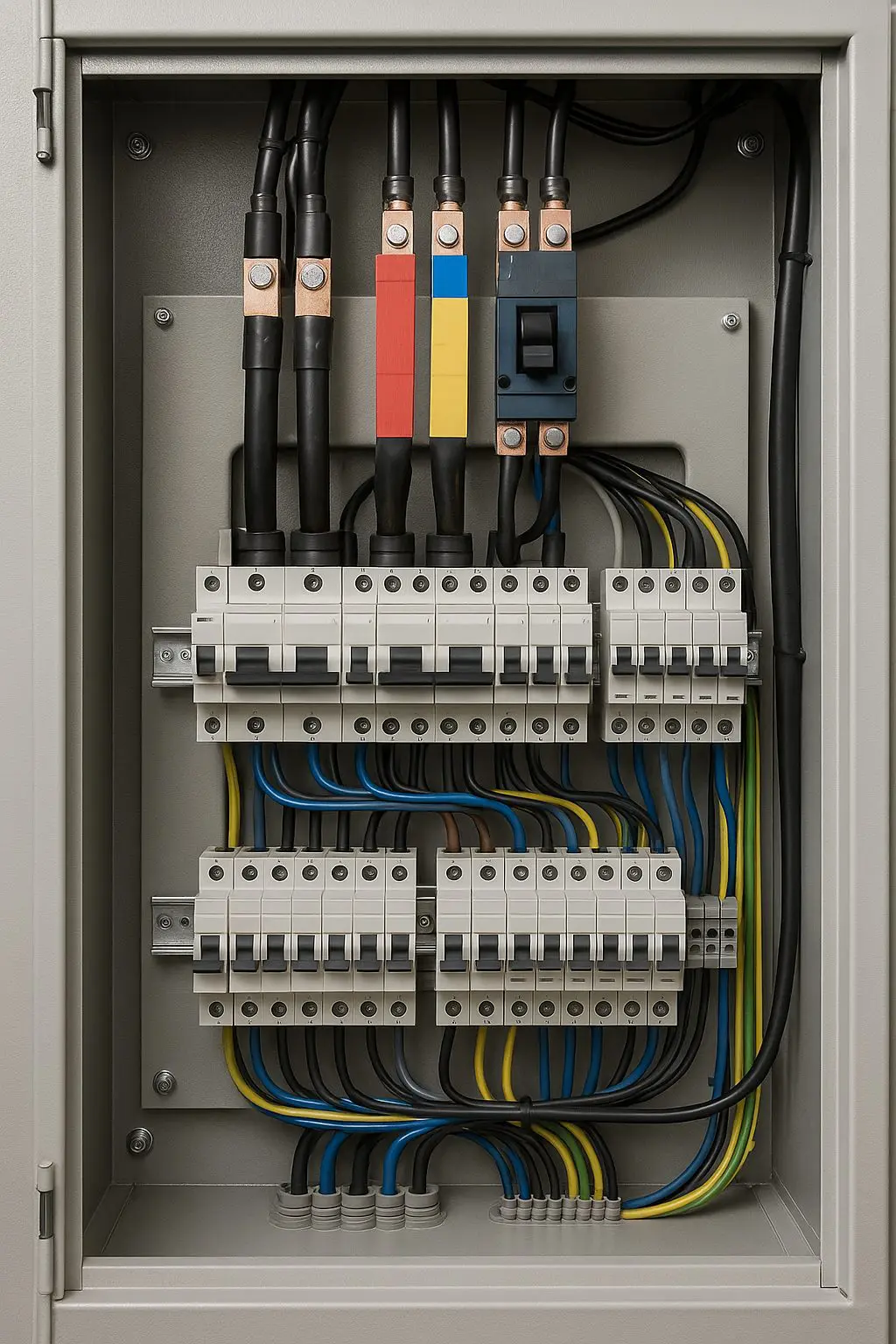
Electrical thermal imaging makes that heat visible. It is non-intrusive, it is carried out with the building occupied and working, and there is no shutdown to plan around. On most sites the only sign of the survey is a thermographer with a camera, working from board to board.
With the installation under representative load, a calibrated radiometric thermal camera records switchgear, distribution boards, busbars, cable terminations and other plant, and each component is compared against a comparable reference so anything running abnormally warm stands out. The real value is in the analysis. Our Level 3 thermographer classifies every anomaly by severity and consequence, takes account of load and access, and states what each finding is consistent with and what cannot be concluded from the images alone. The certified report gives you a clear priority list for your electrical contractor, a defensible record for your insurer and a baseline to compare against next time. Each survey adds to the last, so a change in the way a board behaves can be picked up early.
Certified thermal imaging for electrical systems, from switchgear to final circuits, analysed and reported by a Level 3 thermographer.
Page Subjects
electrical thermal imaging, electrical thermographic inspection, electrical thermal imaging UK, certified thermal imaging for electrical systems, electrical thermography survey



Page Tags
electrical thermography, electrical thermal imaging, thermographic inspection, condition monitoring, predictive maintenance, switchgear
Request an Electrical Survey Quotation
Every electrical installation is different, so every electrical thermography survey is scoped to the site, the plant to be covered, access arrangements and the question you need answered. Tell us about the installation, whether the survey is for maintenance planning, an insurer or a specific concern, and any deadline you are working to, and we will come back with a clear proposal and a quotation for the work. If you already capture your own thermal images, tell us that too.

Why electrical faults show heat
Reading Heat in Electrical Plant
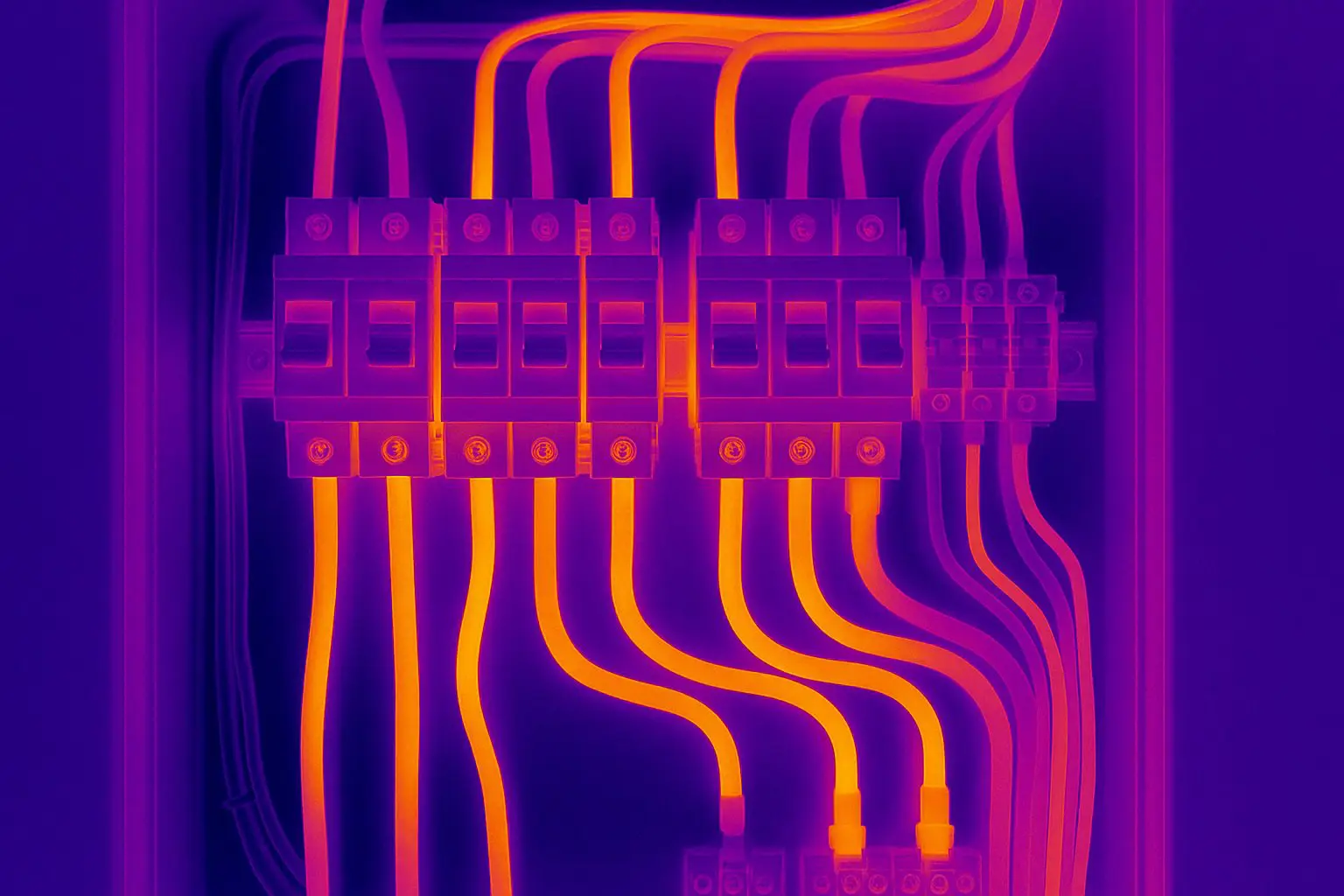
Current flowing through resistance produces heat. A healthy connection has very little resistance, so it runs close to the temperature of the conductors either side of it. When a connection loosens, corrodes or is poorly made, its resistance rises and it starts to run warm, which a thermal camera shows as a distinct hot spot.
The same principle applies across the whole installation. A cable termination in a switchboard, a fuse carrier, a contactor in a control panel or a joint in a busbar run all depend on good contact to carry current without heating. Over time, load cycling, vibration, oxidation and alterations can all degrade that contact, and the heat it produces can in turn accelerate the deterioration, so a small problem left alone tends to grow.
An electrical thermographic inspection finds those warm spots by comparison. Each phase is read against the others, each device against similar devices carrying similar load, so a component running warmer than its reference stands out clearly.
Not every warm component is a fault. Some devices run warm by design, and a heavily loaded circuit is always warmer than a lightly loaded one, so a temperature reading on its own says very little.
Overload and imbalance show differently from a poor connection. An overloaded cable tends to run warm along its length rather than at a single point, while an imbalance across three phases shows as one phase consistently warmer than the others. Telling these patterns apart matters, because each points the electrical contractor towards a different investigation, and the report says which explanation the evidence supports.
That is why load is measured and recorded, why every image is reviewed rather than flagged automatically, and why each finding is classified on its pattern, its location and its load together, not on a temperature figure alone.
How an electrical survey works
Load, Access and the Report
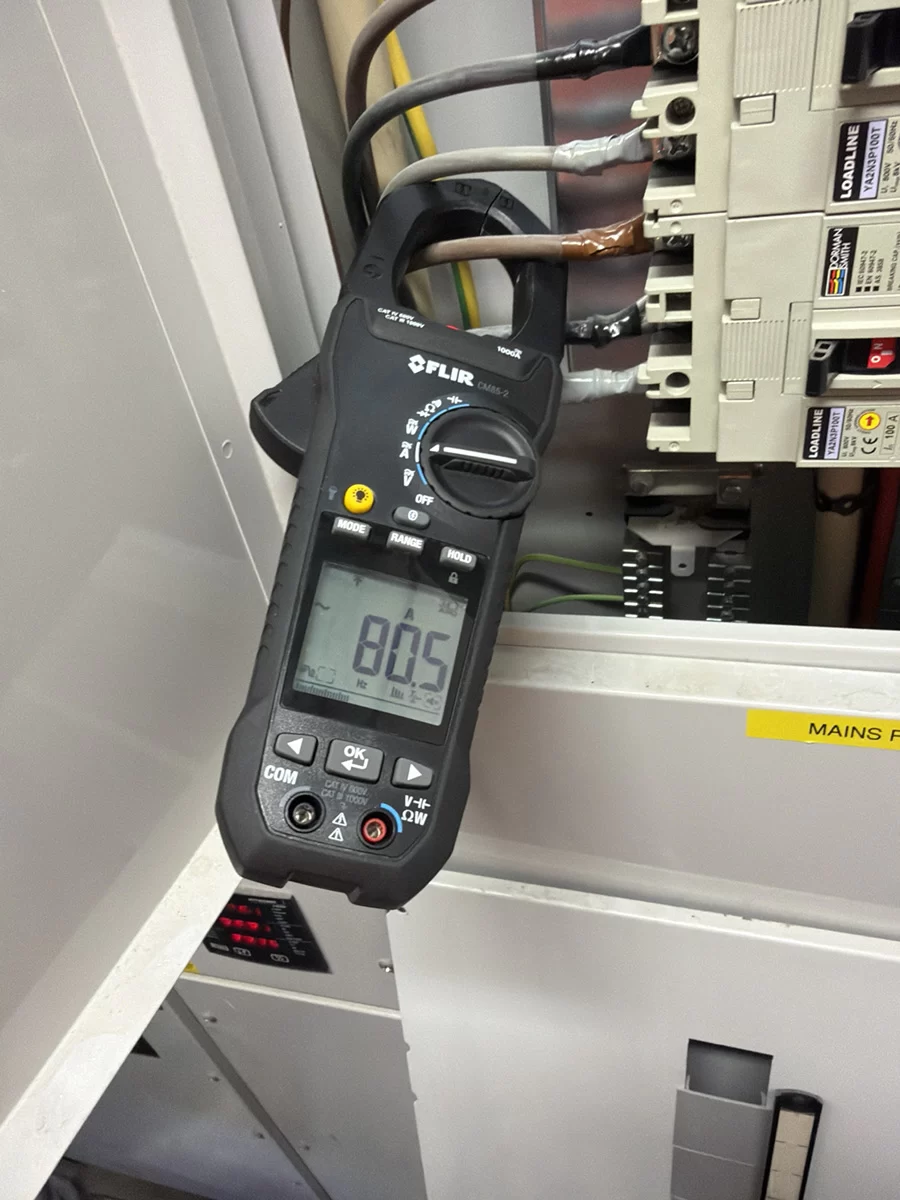
An electrical thermography survey only means something if the installation is working. Plant is surveyed under representative operational load, and the load is recorded at the time of capture, because a lightly loaded circuit can hide a problem that would show clearly at full demand. Where load is low, the report says so and limits its conclusions accordingly.
Access matters as much as load. Equipment is surveyed covers-off where it is safe and permitted to do so, under a documented safety protocol, with covers removed by the client’s authorised person. Where covers must stay on, device fronts and cover surfaces can still be assessed, and the report records what could and could not be seen.
Every finding is classified on two separate axes: severity, which grades the temperature difference above a comparable baseline, and consequence, which records what the affected component means for the installation and the people who rely on it.
The certified report sets out the conditions, the load, the access state and every limitation, then lists the findings in order of priority, so your electrical contractor can plan investigation and you have a clear, dated record of the installation that can be shared with your insurer, your facilities team and the contractor.

Case Study
Eleven Boards Surveyed at a Cardiff Casino
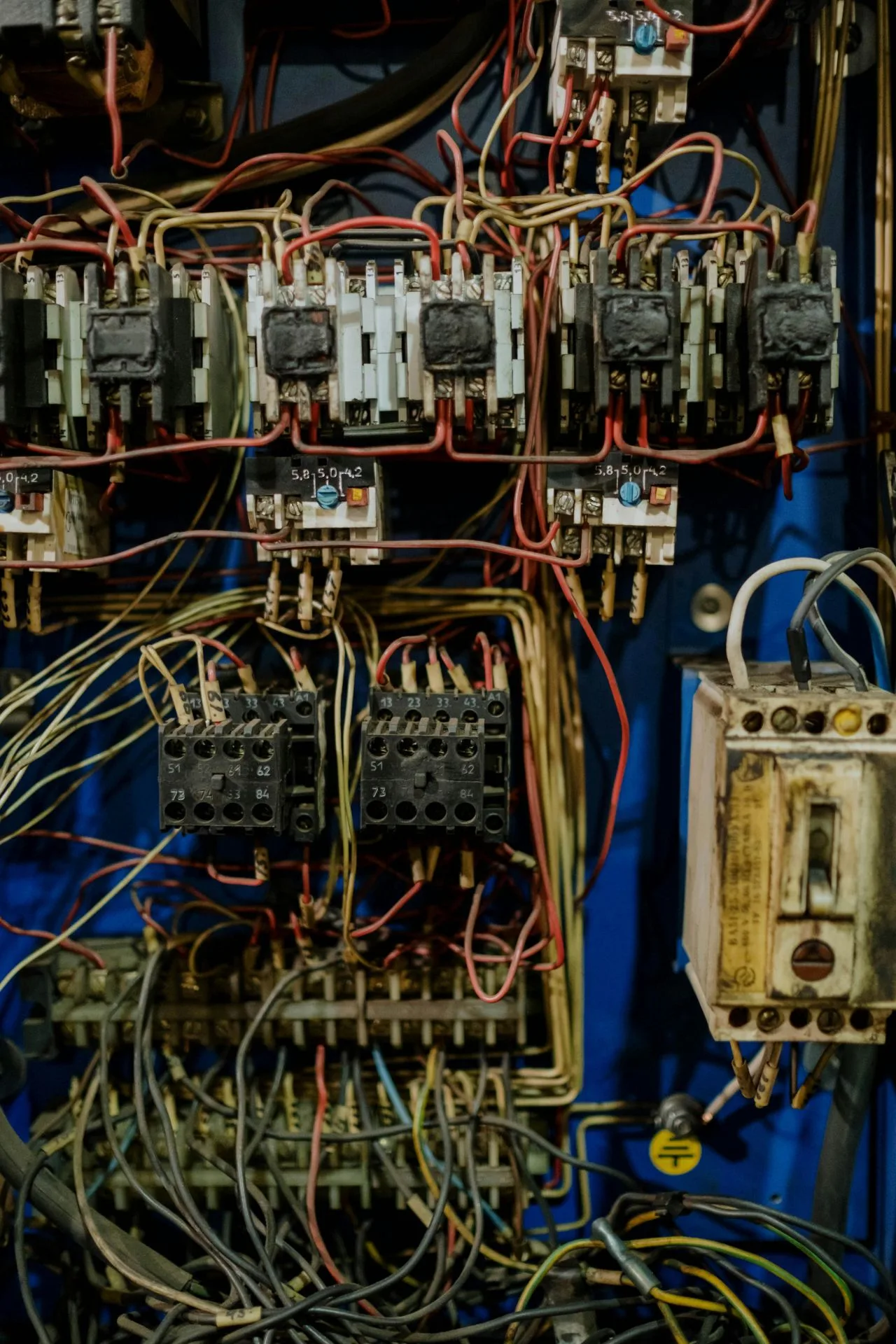
A Level 3 electrical thermographic condition screening of eleven distribution boards at a casino in Cardiff, commissioned to support the venue’s insurance position on its fixed wiring. Every board was surveyed energised and under attested load, and fifty thermograms were classified for severity and operational consequence. The installation was found to be operating normally, with two conditions referred for further investigation by the venue’s electrical contractor. The certified report gave the venue a clear record for its insurer and a baseline for future surveys.
Standards and Certification
Thermographic inspection, analysis and reporting are carried out by a Thermography Services (UK) ITC Level III Certified Master Thermographer (Infrared Training Centre; Certification #205722059), practising in accordance with the frameworks of ISO 18436-7:2014, ASNT SNT-TC-1A and ANSI/ASNT CP-105, and BINDT CMGEN Appendix B (UK training governance). Inspection methodology is aligned with IEC 62446-3:2017 (solar PV) and BS EN ISO 6781-1:2023 (building envelopes) as applicable.
Electrical Thermography Survey
What an electrical thermography survey covers
An electrical thermography survey covers the parts of an installation where heat builds when something is wrong: incoming supplies and main switchboards, low-voltage switchgear and isolators, distribution boards and panel boards, busbar systems, cable terminations and joints, contactors and motor control equipment, and the protective devices that feed each circuit. The scope is agreed before the survey so the report covers the plant that matters most to your site, and every item is identified as labelled on site so each finding can be traced back to the exact component it describes.
Electrical thermal imaging is non-intrusive and is carried out with the installation running, which is why it suits offices, retail and hospitality, healthcare, education, data and communications rooms, and industrial and manufacturing sites that cannot easily shut down. Because nothing is disconnected, a survey can be repeated on a regular cycle, building a thermal record of each item of plant over time. As part of predictive maintenance thermography, that record turns a single survey into a trend, and a change in behaviour is often the earliest warning of all.
Certified thermal imaging for electrical systems is also used as evidence. Insurers recommend it in their loss prevention guidance, facilities teams use it to plan maintenance budgets, and social landlords can use a thermographic survey as one way to evidence an investigation into electrical hazards under Awaab’s Law, SI 2025/1042, as its second phase extends to electrical hazards from 30 November 2026.
Why a Level 3 thermal imaging electrical inspection
Many providers add thermal imaging to electrical testing as a side service, at an entry level of thermographic training. Thermography Services (UK) works the other way round: thermography is the specialism, and every survey is analysed, classified and signed off by our Level 3 thermographer. Findings are classified conservatively and explained in plain language, so they stand up to challenge from an electrical contractor, an insurer or another thermographer. Each report carries the conditions at capture, the load and access state of every item surveyed, the radiometric settings and the limitations, so it remains a defensible record long after the survey day. Where your own team already captures thermal images, the same Level 3 analysis can be applied to that data, and sites running an in-house programme can have it independently benchmarked.
Thermography is a qualitative, comparative assessment of observed thermal behaviour under the conditions at the time of inspection. It cannot detect faults that produce no heat, and it is not an alternative to the periodic inspection and testing of an installation. It complements that inspection by showing where heat indicates a developing condition, so the investigation that follows can be targeted rather than spread across the whole installation. Remedial work is always for a suitably qualified electrical contractor.
Electrical thermal imaging surveys are carried out across Sussex, Surrey, Kent, Hampshire, Berkshire and London, including Crawley, Horsham, Brighton, Guildford, Croydon, Maidstone, Tunbridge Wells, Southampton, Portsmouth and Reading, and across the UK on request.
Method and Classification
The standards behind it
Electrical thermography surveys follow a method aligned with the general procedures of ISO 18434-1:2008 for condition-monitoring thermography: a defined scope, representative load, recorded conditions and radiometric settings, and comparison against a comparable baseline component. The method, the camera settings and the conditions are recorded in every report, so a later survey can be carried out the same way and the two compared fairly.
Each anomaly is graded for severity on six levels, Not Applicable, Advisory, Low, Medium, High and Critical, and tagged separately for consequence. Thermography complements the periodic inspection and testing of an installation under BS 7671; it does not replace it, and every report says so. Where a finding sits close to a limit set by the installation standard, the report notes it for the electrical contractor to assess.
Request an Electrical Survey Quotation
Every electrical installation is different, so every electrical thermography survey is scoped to the site, the plant to be covered, access arrangements and the question you need answered. Tell us about the installation, whether the survey is for maintenance planning, an insurer or a specific concern, and any deadline you are working to, and we will come back with a clear proposal and a quotation for the work. If you already capture your own thermal images, tell us that too.