
Damp and Mould Surveys with Condensation Thermal Imaging
Damp and mould surveys using thermal imaging and dew point analysis, explained in a certified Level 3 report.
Damp and mould usually have one of three causes: condensation on cold surfaces, water getting in from outside, or moisture rising or spreading through the structure. Each calls for a different response, and treating the wrong one wastes money and lets the mould return. A damp and mould survey with thermal imaging shows which explanation the evidence supports.
Thermography Services (UK) combines thermal imaging with air temperature and humidity readings to compare every surface with the dew point. Each survey is analysed by our Level 3 thermographer and set out in a certified report that landlords, managing agents and owners can rely on.

Find out why the mould keeps coming back, with evidence you can act on.
Black mould in the corner of a bedroom, a damp patch behind a wardrobe, windows streaming every morning: the signs are easy to see, but the cause often is not. Wiping the mould away or repainting deals with the symptom. If the cause is not found, the mould comes back, often in the same place, and the tenant or homeowner is left wondering whether anything was done at all.
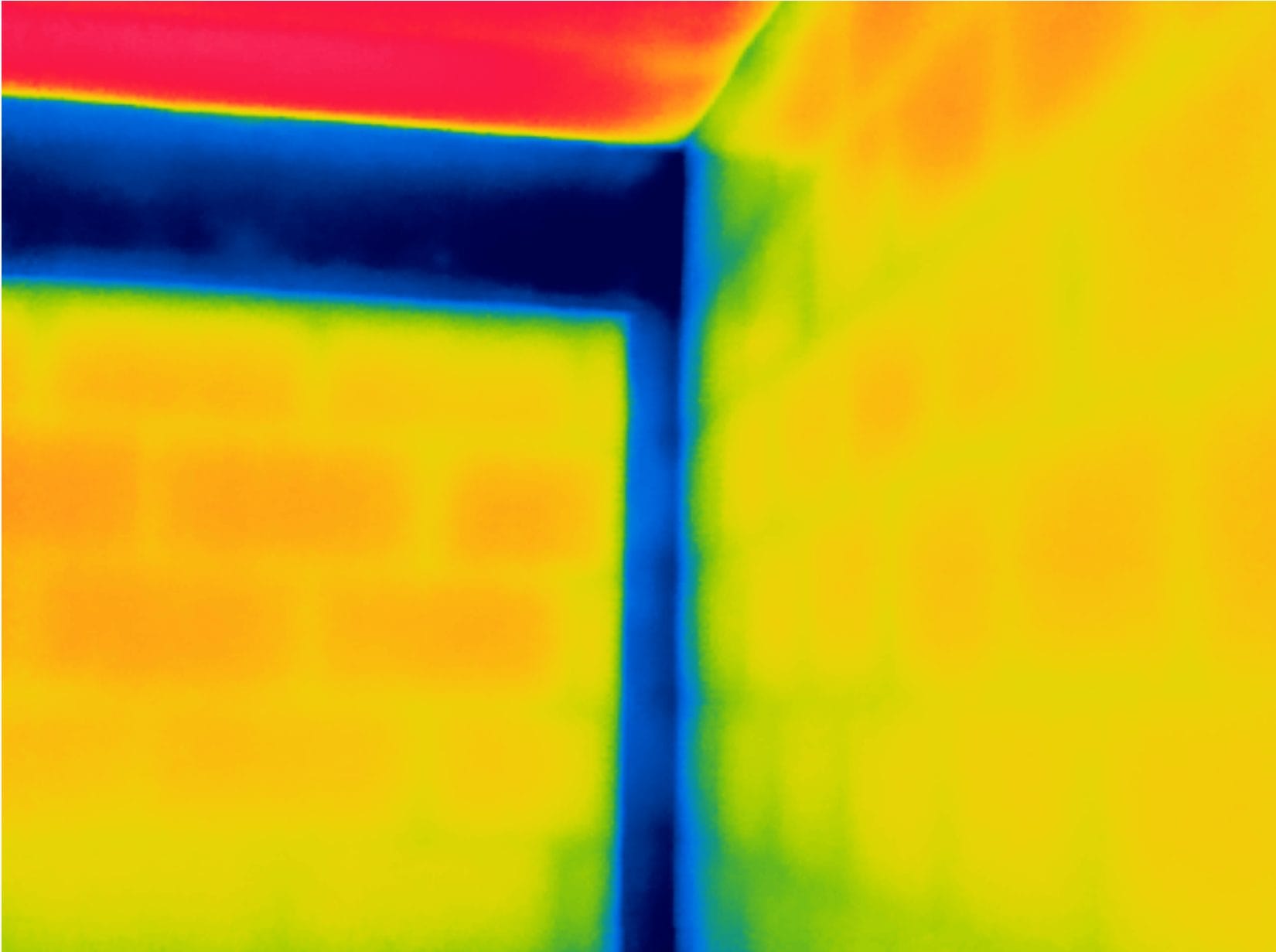
A thermal camera sees what the eye cannot. Damp and cold surfaces show up as patterns of temperature, and those patterns usually point to why the moisture is there.
Condensation forms where a surface falls below the dew point of the air in the room, the temperature at which water vapour turns back into liquid. That happens most at cold spots: an external corner, a thermal bridge at a lintel or floor edge, a patch of missing insulation, a wall behind furniture where warm air cannot reach. Water coming in from outside, through a roof, a gutter, a failed seal or a wall, leaves a different pattern, usually linked to a point of entry and to the weather. By measuring the air temperature and humidity in each room, calculating the dew point and comparing it with the surface temperatures the camera records, our Level 3 thermographer can show which surfaces are at risk of condensation and which damp areas are consistent with another cause. The certified report sets this out room by room, with thermal and visual images side by side and every limitation stated, so the response can be aimed at the cause.
Damp and mould surveys using thermal imaging and dew point analysis, explained in a certified Level 3 report.
Page Subjects
damp and mould survey, condensation survey thermal imaging, mould survey for landlords, dew point analysis building, damp survey thermal imaging



Page Tags
damp survey, mould survey, condensation, dew point, Awaab's Law, social housing, building thermography
Request a Damp Survey Quotation
Every property and every damp problem is different, so every damp and mould survey is scoped to the building, the rooms affected and the question you need answered. Tell us about the property, where the damp or mould appears, how long it has been there and whether the survey supports a landlord investigation, a complaint or your own planning, and we will come back with a clear proposal and a quotation for the survey and report.


Why damp and mould form
Cold Surfaces, Moisture and Mould
Indoor air always carries water vapour. Cooking, washing, drying clothes, bathing and simply breathing add more every day, and in a well-sealed home that moisture has fewer ways to leave. Some of the largest sources, such as drying washing indoors, are the easiest to overlook.
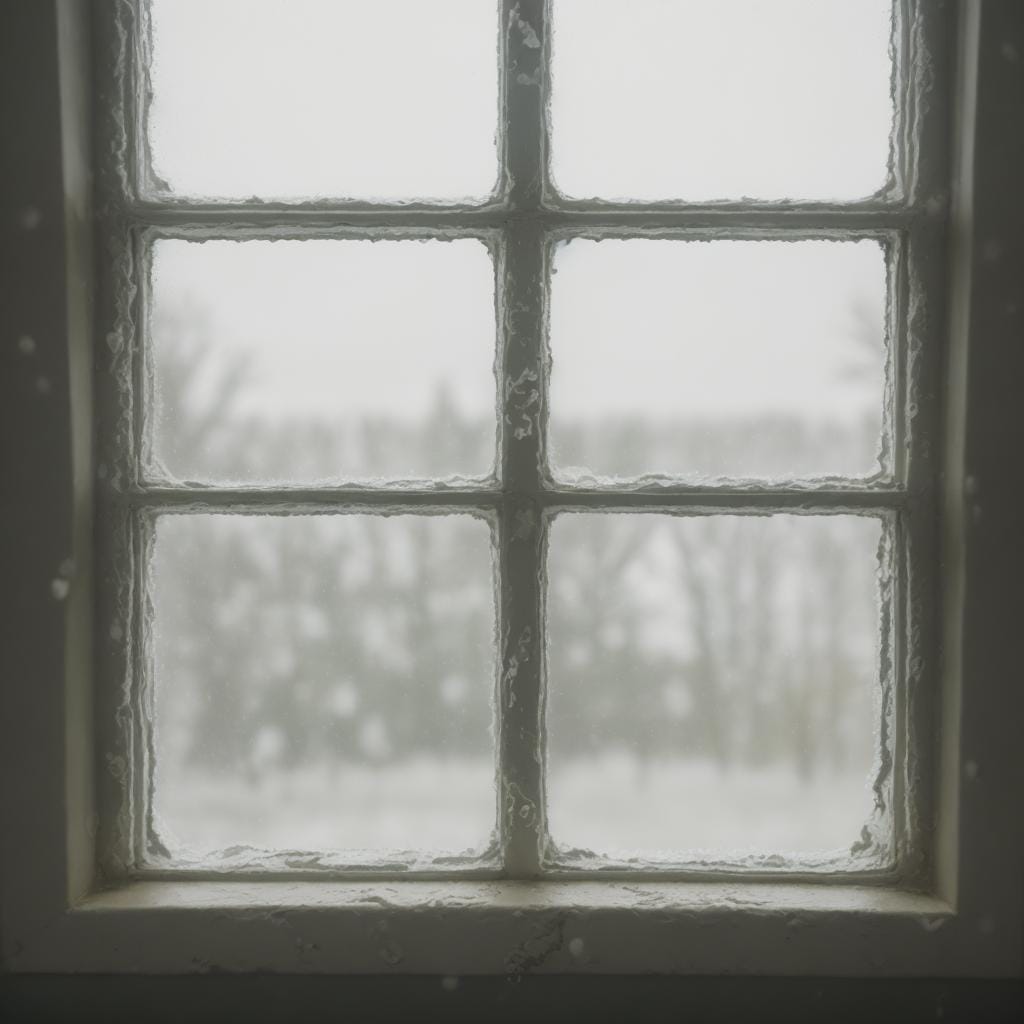
Warm air holds more water vapour than cold air. When room air meets a surface colder than its dew point, the vapour condenses into liquid on that surface. Repeat that night after night on the same patch of wall and the surface stays damp long enough for mould, whose spores are always present in the air, to take hold. That is why condensation mould so often appears in corners, around window reveals, along the top of external walls and behind wardrobes standing against an outside wall: these are the coldest surfaces in the room, and the ones the warm air reaches least.
Dew point analysis turns that physics into evidence.
With the air temperature and relative humidity measured in each room, the dew point can be calculated, and the thermal camera shows every surface temperature in view at once. A surface close to or below the dew point is at risk of condensation; a surface comfortably above it is not. The gap between the two shows whether the problem is mainly about cold surfaces and moisture levels in the home, or about something else.
Water ingress and rising or penetrating damp behave differently. Wet materials often read cooler because water evaporating from them takes heat away, and the damp area tends to follow a source: a roof valley, a downpipe, a failed seal, the base of a wall. It often changes with the weather in a way that condensation does not, which is another clue the analysis uses.
Reading these patterns correctly is what separates a useful survey from a set of pictures, so every finding is classified on its pattern, its location and the conditions together.
Related Building Thermography Services
Awaab's Law and landlords
Evidence for a Landlord Investigation
Awaab’s Law applies to social landlords in England. Under The Hazards in Social Housing (Prescribed Requirements) (England) Regulations 2025, SI 2025/1042, a social landlord who becomes aware of potential damp and mould must have it investigated by a competent investigator within 10 working days, and must give the tenant a written summary of the findings within 3 working days of the investigation.
The law does not name a technique. A thermographic survey is one way to evidence that investigation: it records the surfaces affected, the conditions at the time, the cause the evidence supports and the limitations, in a form that sits alongside the landlord’s own records and the written summary.
From 30 November 2026, the second phase extends the same approach to further hazards, including excess cold, which a thermal survey can also help to evidence. Cold homes and damp homes are often the same homes, so one survey can serve both.
Private landlords, managing agents and homeowners use the same survey for a simpler reason: to understand why a home is damp before deciding what to do about it. Every report is written and certified by our Level 3 thermographer, whoever commissions it, and it states plainly what was surveyed and what was not.
Case Study
Envelope Survey of an Edinburgh High-Rise Block
A Level 3 thermographic assessment of a high-rise residential block in Edinburgh, built from pre-cast concrete panels, as part of a wider pre-refurbishment condition programme. Eighteen thermograms across all four elevations and the roof were reviewed and annotated. The analysis found fabric heat loss across every heated elevation, continuous thermal bridges at both north-facing corners running the full height of the building, and roof moisture indicators classified as High and Medium severity. The certified report gave the programme a defensible baseline for the refurbishment.
Standards and Certification
Thermographic inspection, analysis and reporting are carried out by a Thermography Services (UK) ITC Level III Certified Master Thermographer (Infrared Training Centre; Certification #205722059), practising in accordance with the frameworks of ISO 18436-7:2014, ASNT SNT-TC-1A and ANSI/ASNT CP-105, and BINDT CMGEN Appendix B (UK training governance). Inspection methodology is aligned with IEC 62446-3:2017 (solar PV) and BS EN ISO 6781-1:2023 (building envelopes) as applicable.
Damp and Mould Surveys
What a damp and mould survey covers
A damp and mould survey covers the rooms where damp, mould or condensation has been seen or reported, the external walls and roof areas that bound them, and any likely source of water outside. Inside, each affected room is recorded wall by wall, with the air temperature and humidity measured so the dew point can be calculated. Outside, the elevations behind the affected rooms are recorded too, so a pattern inside can be read against what is happening on the other side of the wall. Gutters, downpipes, roof edges and ground levels are checked where they could explain a damp area.
Condensation survey thermal imaging is especially useful where the same room keeps growing mould after it has been cleaned and treated. It shows whether the affected surfaces are cold enough for condensation to form, and why: a thermal bridge, a gap in the insulation, a cold corner or a wall starved of warm air. Damp survey thermal imaging also helps where water ingress is suspected, by showing the extent of a damp area without opening up the wall, so any intrusive check can be made in the right place.
Mould surveys for landlords are a large part of the work. Housing associations, local authorities, managing agents and private landlords use the report to support an Awaab’s Law damp and mould investigation, to understand a complaint, to plan work across a block or estate, and to keep a dated record of what was found and when. A follow-up survey after work has been done shows whether the cold surfaces or the damp areas have changed, which is useful evidence when a case is reviewed.
Thermal imaging for damp detection, explained
Dew point analysis of a building is only as good as the reading of it. Every condensation or damp thermal survey is analysed by our Level 3 thermographer, who separates condensation risk from other causes, notes what each pattern is consistent with and what else could explain it, and states how confident the analysis is. Where a finding needs confirming with an intrusive or contact check, the report says so and says where. Patterns are described as indicating or consistent with a cause, never as proof of one.
Thermography is a qualitative, comparative assessment of surface temperatures under the conditions at the time of the survey. It cannot see inside a wall and does not measure moisture content directly, and a single visit records a single set of conditions, so the report states those conditions plainly. Findings identify the likely cause and where to investigate; the choice of any remedy is for the landlord, owner or their builder.
Damp and mould surveys are carried out across Sussex, Surrey, Kent, Hampshire, Berkshire and London, including Crawley, Horsham, Brighton, Worthing, Guildford, Woking, Croydon, Maidstone, Portsmouth and Reading, and across the UK on request.
Awaab's Law, Read Correctly
What the law says
Awaab’s Law is the name given to the duties set by The Hazards in Social Housing (Prescribed Requirements) (England) Regulations 2025, SI 2025/1042, made under section 10A of the Landlord and Tenant Act 1985. They apply to social landlords in England. From the day a landlord becomes aware of a potential damp and mould hazard, the regulations allow 10 working days to complete an investigation by a competent investigator and a further 3 working days to give the tenant a written summary, with emergency hazards dealt with within 24 hours.
The Hazards in Social Housing (Prescribed Requirements) (England) (Amendment) Regulations 2026 extend the duties to further hazards, including excess cold, from 30 November 2026. The regulations name no survey technique: a thermographic survey is one way to evidence the investigation.
Request a Damp Survey Quotation
Every property and every damp problem is different, so every damp and mould survey is scoped to the building, the rooms affected and the question you need answered. Tell us about the property, where the damp or mould appears, how long it has been there and whether the survey supports a landlord investigation, a complaint or your own planning, and we will come back with a clear proposal and a quotation for the survey and report.


