
Heating Product Thermal Validation and Thermal Uniformity Testing
Independent thermal imaging tests of heating products, recording how evenly and how quickly they heat under controlled studio conditions.
A heating product is judged by its surface: how evenly it warms, how quickly it reaches temperature and how it responds to the power it is given. Thermal imaging shows all of that at once, across the whole surface, in a way that a handful of spot readings never can.
Thermography Services (UK) carries out heating product thermal validation in a controlled studio for manufacturers and developers of underfloor heating, infrared heaters, heated panels, films and elements. Each test is designed around your question, run under controlled conditions and cross-checked against contact measurements. Every report is written and certified by our Level 3 thermographer.
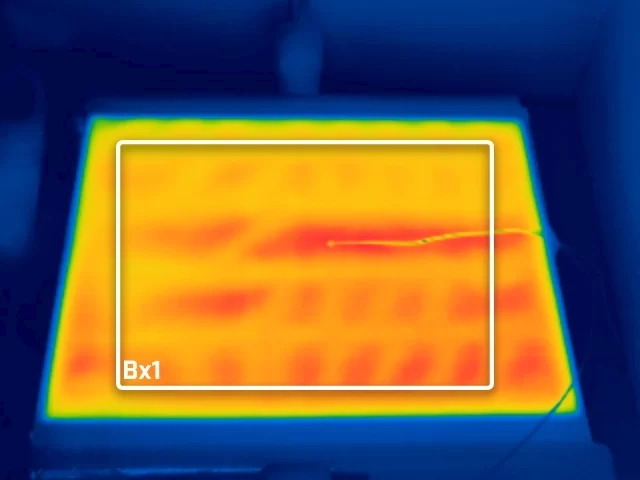
See exactly how your heating product warms, spreads its heat and settles.
Heating products are sold on performance, and performance shows up as heat on a surface. An underfloor heating panel should warm the floor evenly. An infrared heater should put its output where it is aimed. A heated panel or film should reach its working temperature without hot spots, cool edges or gaps along a printed track. Customers, installers and specifiers increasingly want evidence that a product does what its literature says, and development teams need to know where a design is losing heat or concentrating it.
Thermal imaging provides that evidence across the whole surface at once. It shows the pattern of heat, not just a number, so a cool corner or an uneven element stands out immediately.
Heating product thermal validation turns that picture into a measured record. Samples are tested in our controlled studio, with air conditions logged throughout and the surface emissivity either measured or set from a determined value, so the temperatures read are the temperatures of the surface. Depending on the question, a test can record warm-up from cold, the time taken to reach a steady temperature, cool-down after switch-off, the uniformity of surface temperature at each setting and the temperature rise produced by each step in power input. Contact measurements are taken alongside the thermal images as an independent check. The certified report sets out what was tested and how, presents the thermal images and data, and states plainly what the results show and the conditions they apply to. Your development team gets clear evidence to act on, and your customers can see how the product behaves.
Independent thermal imaging tests of heating products, recording how evenly and how quickly they heat under controlled studio conditions.
Page Subjects
underfloor heating thermal testing, infrared heater thermal validation, heated panel thermography test, thermal uniformity testing, heating product performance thermography



Page Tags
heating products, thermal validation, underfloor heating, infrared heaters, thermal imaging, product testing
Request a Heating Product Test Quotation
Every heating product test is designed around the product, its settings and the question you need answered. Tell us what the product is, how it is powered and controlled, the settings or voltages that matter, whether you are comparing designs or supporting a performance claim, and how many samples are available, and we will come back with a clear proposal and a quotation for the work. If a launch date or deadline applies, please tell us that too.
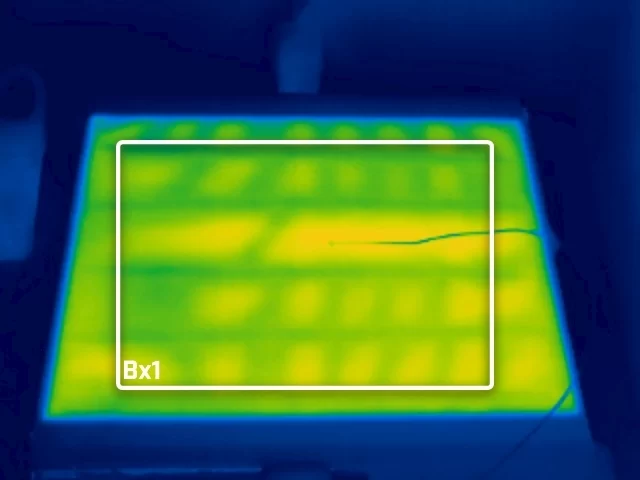
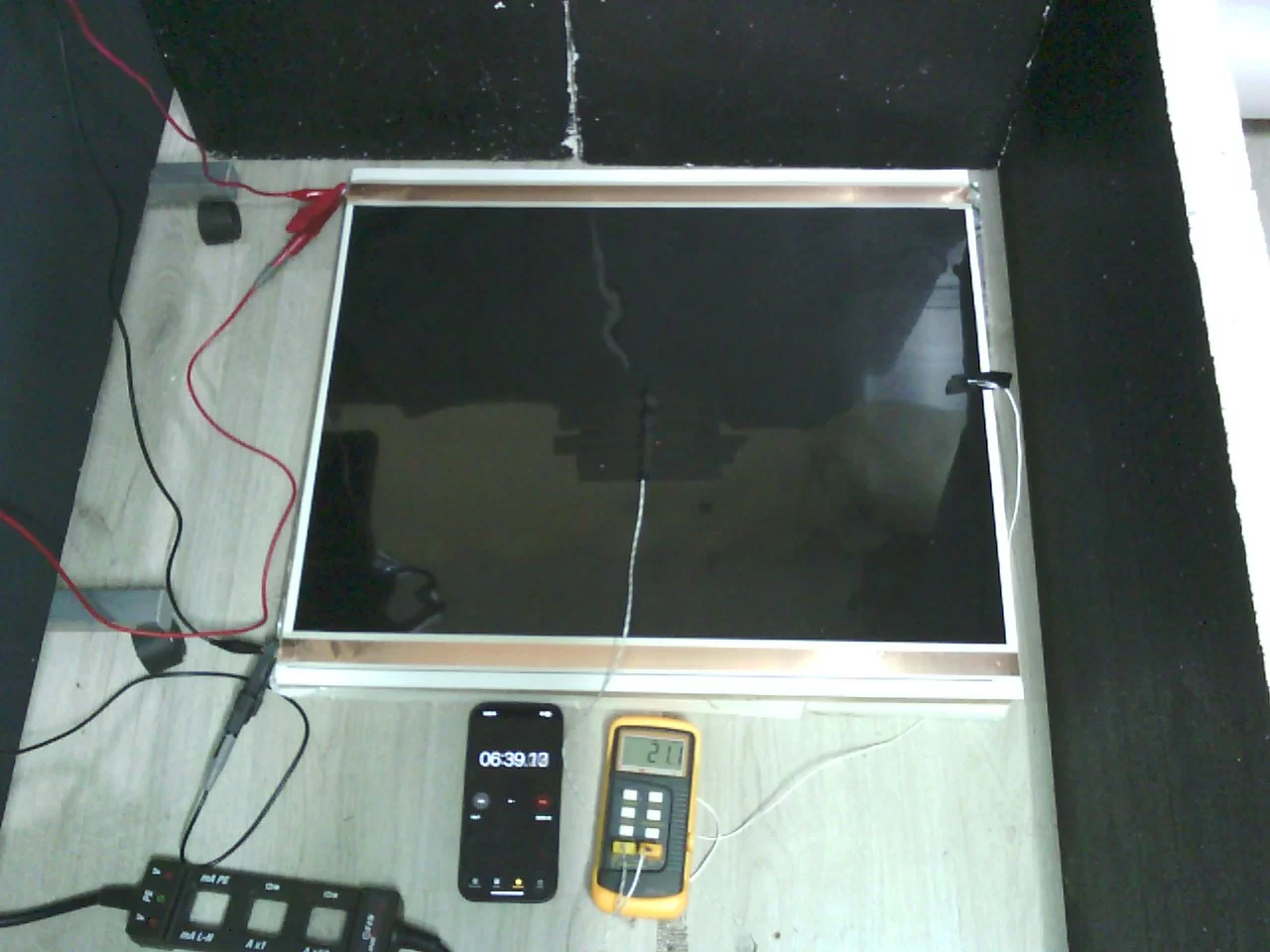
What thermal imaging reveals
Reading Heat Across a Surface
A heating product converts energy into heat and then has to deliver that heat to a surface, a room or a person. Between the element and the surface, design, materials and manufacture all leave their mark, and a thermal image records the result.
Uniformity is usually the first thing to look at.
An underfloor heating panel, a heated mirror or a radiant panel is expected to warm evenly, yet edges lose heat faster than the centre, fixings and joints conduct heat away, and a printed or embedded element can run warmer along its track than between tracks. A thermal image shows the full temperature pattern across the surface, so the spread between the warmest and coolest areas can be measured rather than guessed, and any area that falls outside the expected pattern can be located precisely and recorded for the development team.
Time is the second. How long a product takes to reach a stable temperature, how far it overshoots and how quickly it cools after switch-off all affect comfort, control and the way the product behaves in use. Recording images at fixed intervals turns warm-up and cool-down into curves that can be compared from one design to the next.
Input is the third. Where a product can be run at different voltages or power settings, the surface temperature rise at each step can be set against the power drawn, showing where the product turns its input into useful surface heat most effectively and where the returns begin to fall. That is often the most useful single finding for a development team setting an operating range.
None of this means much unless the temperatures are right. Surface emissivity is accounted for, the reflected temperature is measured and contact readings check the images, so the figures in the report describe the product rather than the camera settings or the room around it.
Related Product Testing Services
How a validation test runs
Designed First, Then Measured
Every validation test starts with the question. Is the aim to compare two prototypes, to support a performance claim, to find the cause of an uneven heating pattern or to set an operating range? The answer decides which settings are tested, how long each one runs and what is recorded.
The test is then written down and fixed before any measurement is taken: the samples, the settings, the time at each condition, the images to be captured and the checks that would make a result invalid. On the day, the sample is allowed to settle at each condition until its temperature is stable before results are taken, and anything done differently from the plan is recorded as it happens.
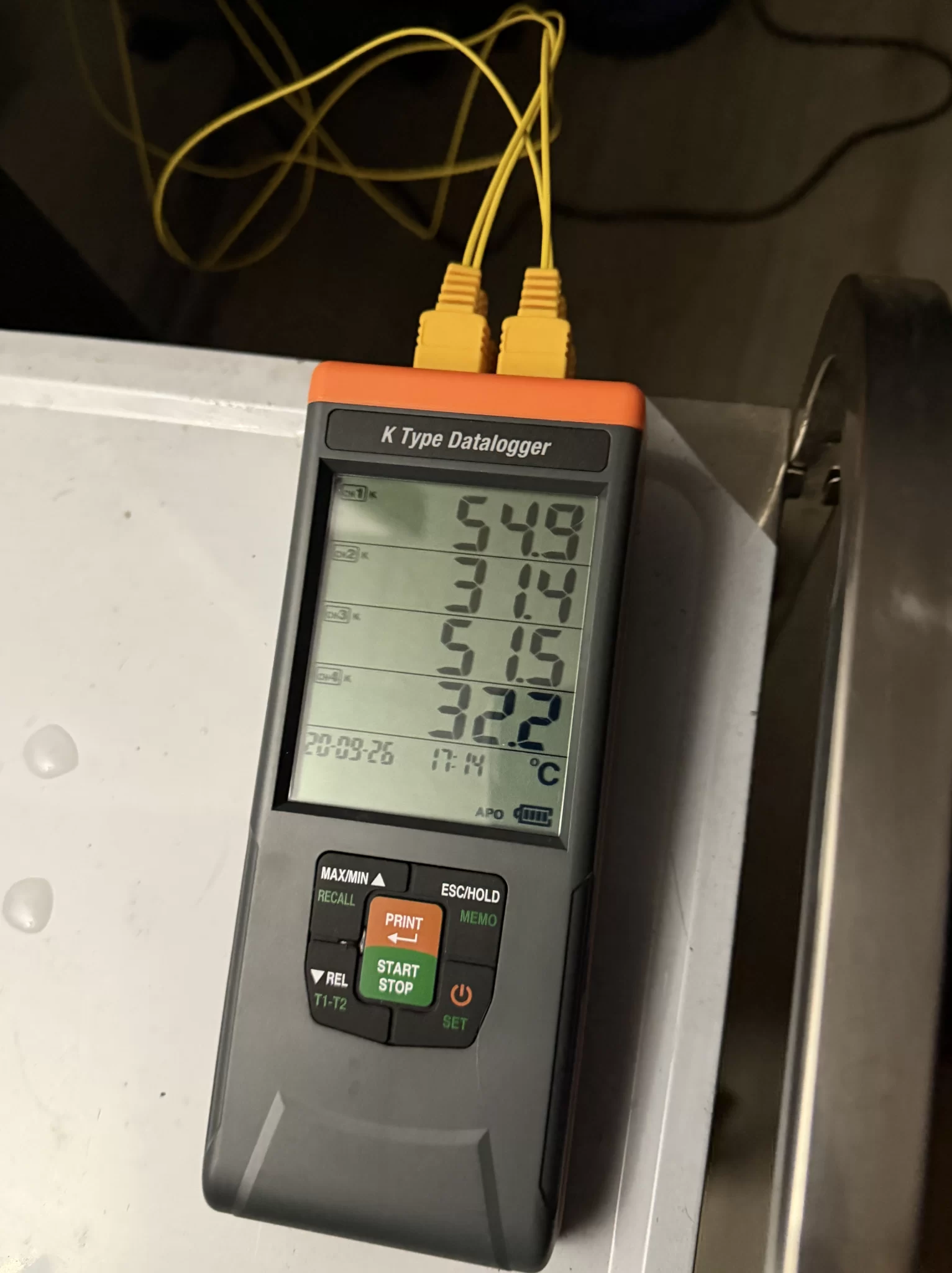
Air temperature is logged throughout, and the surface emissivity is measured on the product or set from a determined value. Contact thermometers on the surface record its temperature alongside the images, giving an independent check on every reading the camera makes.
The certified report presents the images, the data and the conditions together, so the result can be repeated and compared with the next design. Where several prototypes are tested, each runs to the same script, so the differences in the report belong to the products and not to the test.
Case Study
Thermal Testing of a Graphene Underfloor Heating Panel
A thermographic and electrical evaluation of a graphene-based underfloor heating panel for its developer, carried out under controlled conditions. The panel was run at voltages from 8 V to 48 V, with power input and surface temperature rise logged at each step. It turned its input into surface heat most effectively between 20 V and 30 V, with the return falling gradually above 40 V. Thermal imaging showed consistent, uniform heating with no cold spots or discontinuities detected, and the report set out a recommended operating range.
Standards and Certification
Thermographic inspection, analysis and reporting are carried out by a Thermography Services (UK) ITC Level III Certified Master Thermographer (Infrared Training Centre; Certification #205722059), practising in accordance with the frameworks of ISO 18436-7:2014, ASNT SNT-TC-1A and ANSI/ASNT CP-105, and BINDT CMGEN Appendix B (UK training governance). Inspection methodology is aligned with IEC 62446-3:2017 (solar PV) and BS EN ISO 6781-1:2023 (building envelopes) as applicable.
Heating Product Performance Thermography
Heating products and tests covered
Heating product performance thermography suits any product whose job is to warm a surface or a space. Underfloor heating thermal testing is a frequent request, covering electric mats, panels and films, including graphene and carbon heating films, where an even spread of heat across the floor is the whole point of the product; a graphene heating thermal imaging test is one of the most common examples. Infrared heater thermal validation looks at how the emitting face heats and how its output is distributed. Heated panel thermography tests cover radiant ceiling and wall panels, heated mirrors, towel rails, seat and surface heaters, and individual heating elements during development.
A test can include thermal uniformity testing at one or several settings, warm-up and cool-down response, the time taken to reach a steady temperature, and the temperature rise produced by each step in power input. Comparative tests run two or more prototypes under the same conditions, so the difference between them is the product and not the day. Heating element thermal imaging during development can show where an element runs hot, where heat is lost at the edges and how a change of material or layout alters the pattern.
Why controlled conditions matter
Radiant heating thermal validation is only meaningful if the conditions are known. Room temperature, air movement, the surface the product sits on and the reflected temperature of the surroundings all change what a camera sees. Tests are therefore run in a controlled studio with air conditions logged, the reflected temperature measured, the sample settled at each condition before results are taken, and contact thermometers placed on the surface as an independent check. Surface emissivity is measured on the product or set from a value determined earlier, because the coatings and finishes used on heating products often differ from the values in published tables. Every image is stored radiometric, so the data can be re-examined later.
The report sets out the question, the method, the conditions, the images and data at each setting, and what the results show, in plain language with the technical detail alongside. It is written to be used: by a development team choosing between designs, in a technical file that needs evidence, or by a sales team that wants to show customers how the product performs. Where a test compares designs, the results are set side by side on the same temperature scale, so differences can be seen at a glance.
Results relate only to the samples tested, under the conditions stated. A thermal validation test is a measured record of thermal behaviour, not a certification of the product, and it complements the heat output and safety testing that product standards set. Heating product thermal validation is available to manufacturers and developers across the UK and internationally, and data your own team has captured can be analysed through our Level 3 report writing service.
Request a Heating Product Test Quotation
Every heating product test is designed around the product, its settings and the question you need answered. Tell us what the product is, how it is powered and controlled, the settings or voltages that matter, whether you are comparing designs or supporting a performance claim, and how many samples are available, and we will come back with a clear proposal and a quotation for the work. If a launch date or deadline applies, please tell us that too.


