
Emissivity Testing and Emissivity Measurement for Thermal Imaging
Measured emissivity values for your product's surface, determined under controlled conditions so that thermal cameras read its temperature correctly.
Emissivity is the property of a surface that tells a thermal camera how much of the infrared radiation it sees comes from the surface itself. Set it wrongly and every temperature read from that surface can be wrong, sometimes by more than the difference you are trying to measure. For coatings, heating products, insulation and new materials, a value from a published table is rarely good enough.
Thermography Services (UK) provides emissivity testing in a controlled studio, determining the emissivity of your surface by recognised methods and stating it with its uncertainty, so engineers, installers and customers can set their cameras with confidence. Every report is written and certified by our Level 3 thermographer.
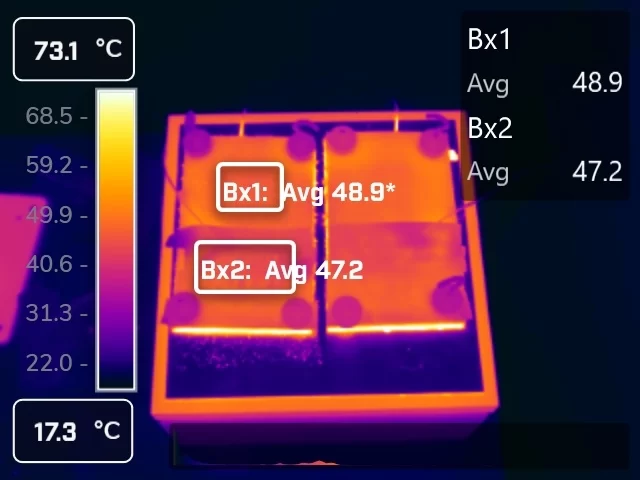
Know the true emissivity of your surface, and read every thermal image of it correctly.
Thermal cameras do not measure temperature directly. They measure infrared radiation and calculate a temperature from it, using an emissivity value the operator enters. If that value does not match the surface, the camera still shows a precise-looking number. It is simply the wrong one, and nothing on the screen says so.
That matters most where the surface is new or unusual. Published emissivity tables cover common materials such as painted steel, brick or timber, but they cannot tell you how a graphene coating, a foil-faced insulation board, a powder-coated heating panel or a textured polymer behaves. Finish, texture, temperature and viewing angle can all change the value, and even a familiar paint can read differently once it is textured, worn or applied over a heated layer. A low-emissivity surface also reflects its surroundings as well as emitting its own heat, so the camera can end up reading the room rather than the product. For a manufacturer, the consequences go well beyond one image: product claims, installation guidance, quality checks and the thermal surveys your customers commission later may all depend on a value nobody has actually measured on your surface.
Emissivity testing replaces that assumption with a measured value. Samples are tested in our controlled studio by two independent methods from the international standard for thermographic procedures, with the reflected temperature measured at every step and each result repeated before it is accepted. The certified report states the emissivity of your surface, the temperatures and viewing conditions it applies to and how confident the result is, together with the camera setting to use. Any thermal claim you make about the product then rests on a figure that was actually measured.
Measured emissivity values for your product's surface, determined under controlled conditions so that thermal cameras read its temperature correctly.
Page Subjects
emissivity testing, emissivity measurement service UK, surface emissivity test, emissivity testing for heating products, emissivity validation thermography



Page Tags
emissivity testing, emissivity measurement, product testing, thermal imaging, coatings, heating products
Request an Emissivity Test Quotation
Every emissivity test is designed around the surface, the temperatures that matter in use and the question you need answered. Tell us about the product or material, its finish and working temperature, how it will be imaged in service and whether samples or offcuts are available, and we will come back with a clear proposal and a quotation for the work. If several finishes or a whole temperature range need covering, please tell us that too.
Why emissivity changes the reading
What Emissivity Means for Thermography
Every surface gives off infrared radiation, and the amount depends on two things: its temperature and its emissivity. Emissivity is a number between 0 and 1 that compares a real surface with a perfect emitter at the same temperature. A matt black paint sits close to 1. Polished aluminium can sit below 0.1.
A thermal camera has to be told which it is looking at.
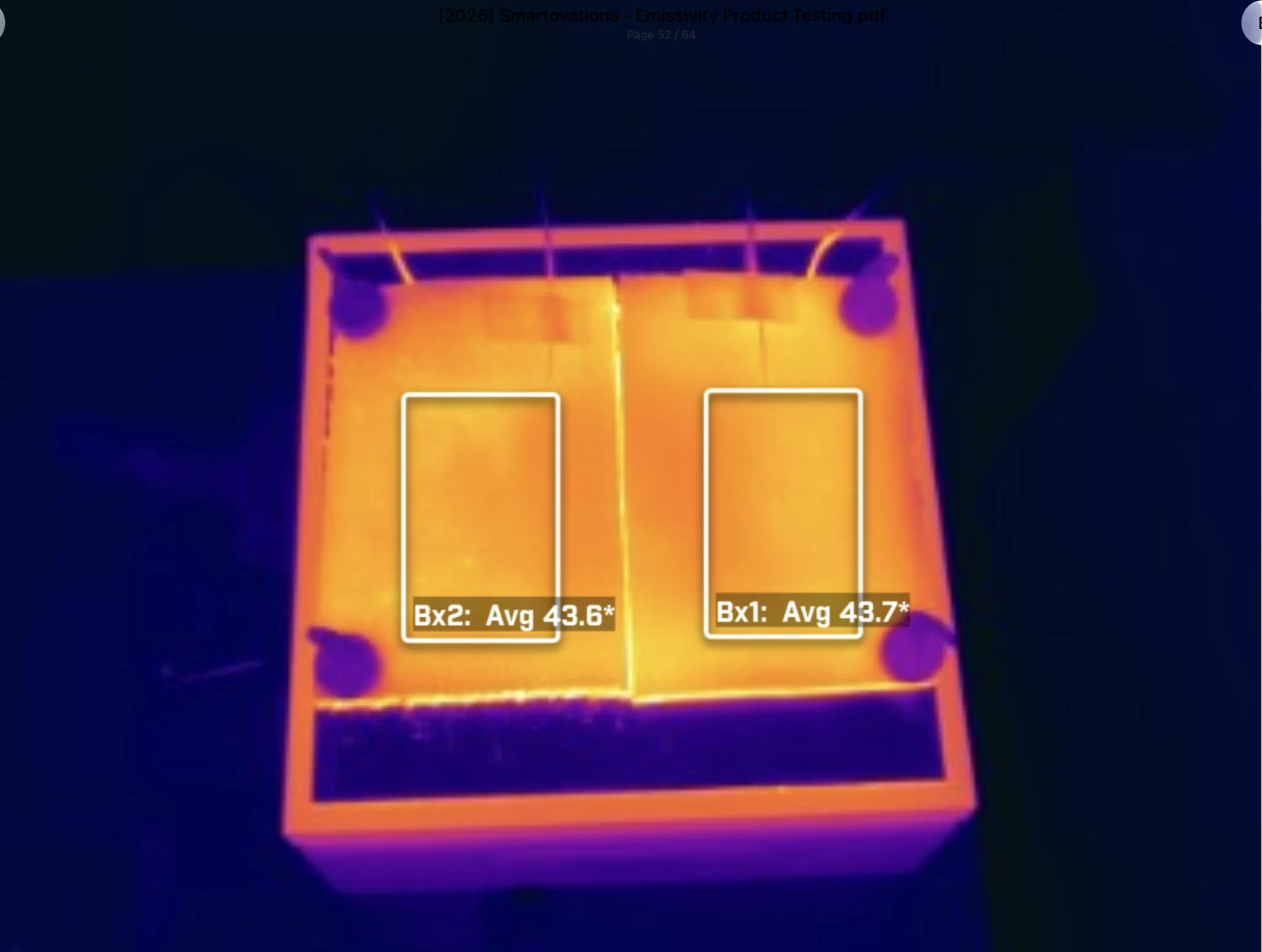
It receives radiation from two sources at once: what the surface emits because of its own temperature, and what it reflects from everything around it. The emissivity setting tells the camera how to separate the two. On a high-emissivity surface the reflected part is small, and a modest error in the setting makes little difference. On a low-emissivity or shiny surface the reflected part can dominate, so the same error in the setting becomes a large error in temperature, and the camera may in effect be reading the ceiling, the operator or a nearby heat source. That is why low-emissivity products are the ones most often misread.
Emissivity is not a single fixed property of a material either. It depends on the finish and texture of the surface, on its temperature, on the infrared waveband the camera works in and on the angle from which the surface is viewed. Two products made of the same material can differ because one is brushed and the other polished, or because one carries a coating.
This is why a published table is a starting point rather than an answer. Tables describe generic materials under conditions that may not match yours, and they rarely list new coatings, composites or treated surfaces at all.
When the value matters, it is measured. A determined emissivity, stated with its uncertainty and the conditions it applies to, turns a thermal image of your product from an estimate into a measurement that can be defended to a customer, a specifier or another thermographer.
Related Product Testing Services
How an emissivity test works
Two Methods, One Measured Value
Every emissivity test is designed before anything is measured. The question, the samples, the temperatures, the methods and the checks that would invalidate a result are written into a test script, which is fixed before the first reading. Anything done differently on the day is recorded as it happens and carried into the report.
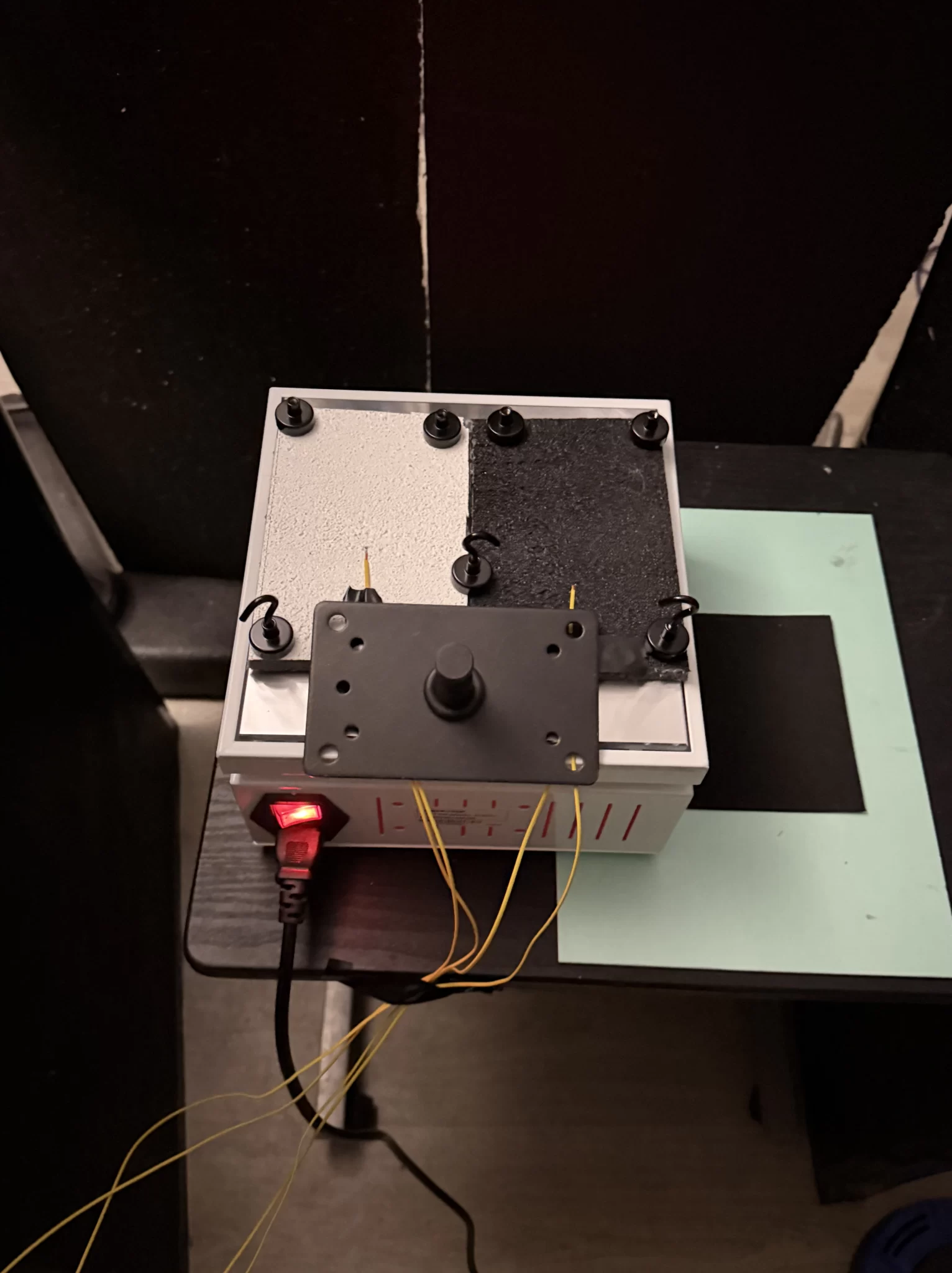
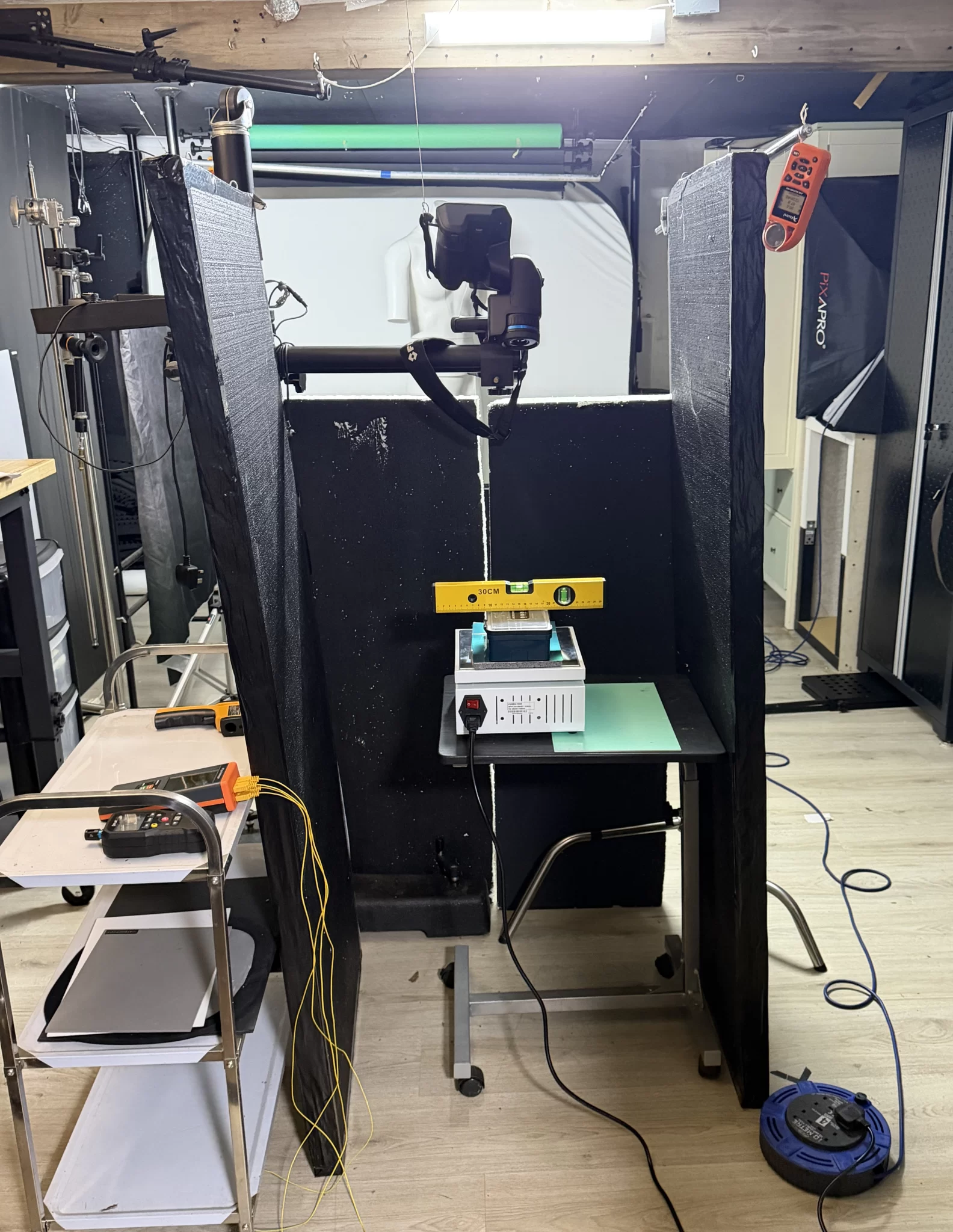
The emissivity is then determined by two independent routes from Annex A of ISO 18434-1:2008. In the contact method, a calibrated contact thermometer measures the true surface temperature, and the emissivity is found that brings the camera into agreement with it. In the reference material method, a material of known emissivity applied beside the test area gives a second, supporting check. The reflected temperature is measured before every replicate, and each determination is repeated and averaged.
Where the question involves temperature, the sample is tested at a series of controlled steps, so the report shows whether emissivity changes across the working range. Where finishes, colours or batches differ, each is tested the same way, so the values can be compared directly and the right one given to each product.
The result is stated with its uncertainty, for the conditions and viewing angle it was measured under, together with the camera setting to use.
Case Study
Emissivity Validation for a Graphene Heating Panel
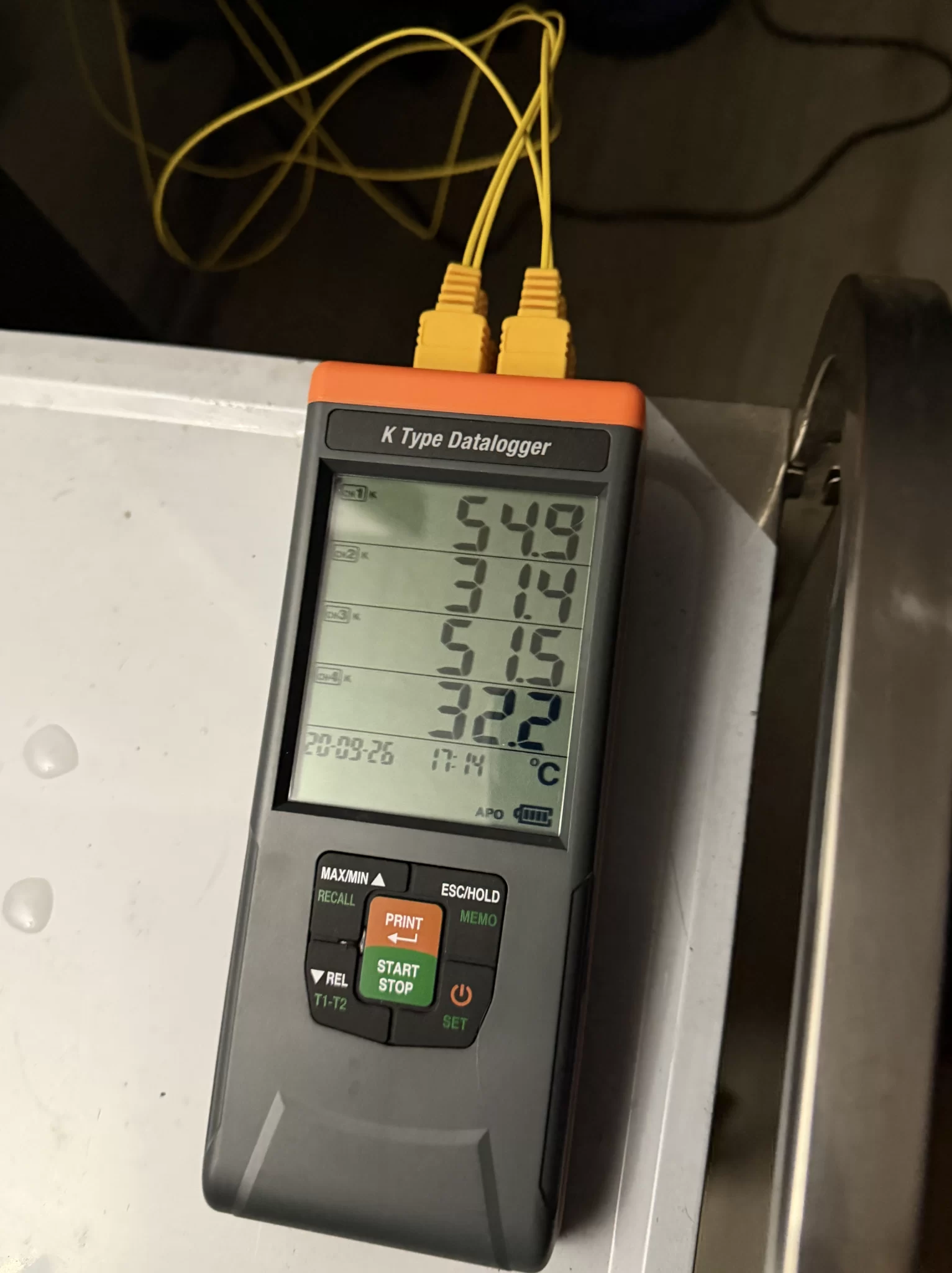
An emissivity validation of a graphene-based underfloor heating panel for its developer, carried out under controlled conditions so that thermal images of the product could be interpreted reliably. The panel was tested under steady thermal load at surface temperatures from 16 °C to 34 °C, using an emissivity reference material cross-checked against contact temperature measurements. The study established a stable emissivity of approximately 0.95 across most of that range, with a lower value towards the top of it, giving the developer validated settings for product development and quality assurance.
Standards and Certification
Thermographic inspection, analysis and reporting are carried out by a Thermography Services (UK) ITC Level III Certified Master Thermographer (Infrared Training Centre; Certification #205722059), practising in accordance with the frameworks of ISO 18436-7:2014, ASNT SNT-TC-1A and ANSI/ASNT CP-105, and BINDT CMGEN Appendix B (UK training governance). Inspection methodology is aligned with IEC 62446-3:2017 (solar PV) and BS EN ISO 6781-1:2023 (building envelopes) as applicable.
Emissivity Measurement Service
What emissivity testing covers
What is emissivity testing? In practical terms, it answers one question: what value should a thermal camera be given to read this surface correctly? An emissivity measurement service starts by agreeing the scope before any test is designed. That sets out the surface or surfaces to be tested, the temperatures that matter in use, the viewing angle that matches how the product will be imaged, and anything the client must agree to, such as cutting a sample to size. Insulating materials cannot reach the temperature of their heat source at the face being measured, so for those the scope is agreed in the surface temperatures the product can actually reach within its rating.
Surface emissivity tests suit coatings and paints, foil-faced and coated insulation, heating panels and films, graphene and other advanced materials, polymers, composites and treated metals. Emissivity testing for heating products is one of the most frequent requests, because the surface of a heating panel is exactly what installers, surveyors and customers will later point a thermal camera at. Where a range of finishes or colours is offered, each can be tested, so that the guidance you publish covers the whole product line. Values can also be determined at more than one temperature where a product works across a wide range, such as a heating element that runs from cold to its full working temperature in normal use.
Emissivity validation thermography you can rely on
Emissivity validation thermography is only as good as the control of the test. Samples are tested in a controlled, windowless studio with air conditions logged and a known background, and the reflected apparent temperature is measured rather than assumed. Contact thermometers are checked against a known reference before use, and the whole measurement chain is checked at equilibrium before any heating begins, when every surface should read the same whatever its emissivity. Every image is saved radiometric and the determination is made on the stored file, so it can be re-examined later from the original data.
Material emissivity measurement follows the discipline testing laboratories use: the method is fixed before the data exists, every record is kept, and the emissivity test report gives enough detail for another competent thermographer to repeat the test. It also separates the value a camera needs from other measures of emittance. A portable emissometer used to ASTM C1371, for example, reports a broadband value near room temperature, which is not the same quantity as the in-band directional emissivity a thermal camera uses at a given angle and temperature.
Results relate only to the samples tested, in the condition they were tested, and apply within the temperature range, waveband and viewing angle stated in the report. The report is a measured record of a surface property, not a certification or approval of the product. Emissivity testing is available to manufacturers, product developers and research teams across the UK and internationally, and a determined value can be reused in every later test, survey or quality check of the same surface.
The Method and Its Standard
The standard behind it
Emissivity is determined by the procedures in Annex A of ISO 18434-1:2008, the general procedures part of the international standard for thermography in condition monitoring. Annex A sets out how reflected apparent temperature is measured with a reflector, how emissivity is found by the contact method and by the reference emissivity material method, and that each determination is repeated and averaged. It also asks for the target to be held well above or below the reflected temperature, because a small temperature contrast makes emissivity hard to resolve.
The standard draws on ASTM E1862 and ASTM E1933 as its informative sources, so clients who specify the ASTM practice receive results built on the same principles. Uncertainty is evaluated following JCGM 100:2008, and every result is stated for the conditions it was measured under.
Request an Emissivity Test Quotation
Every emissivity test is designed around the surface, the temperatures that matter in use and the question you need answered. Tell us about the product or material, its finish and working temperature, how it will be imaged in service and whether samples or offcuts are available, and we will come back with a clear proposal and a quotation for the work. If several finishes or a whole temperature range need covering, please tell us that too.