

Awaab’s Law Explained – What It Means for Landlords
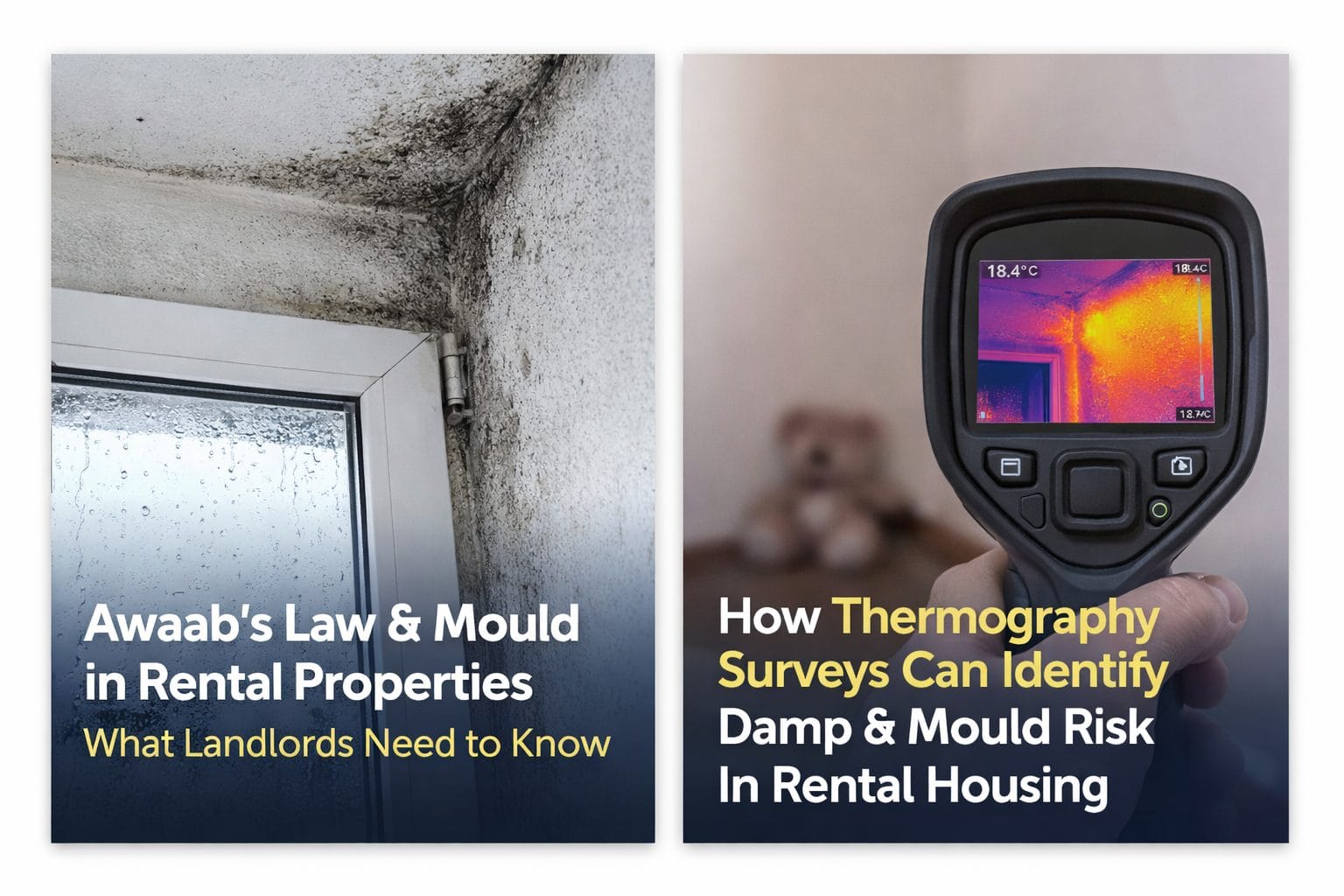
Awaab’s Law introduces strict legal requirements for landlords to investigate and resolve damp and mould hazards in rental housing. This article explains what the law means, who is affected, and how building thermography surveys can help diagnose condensation and mould risk. Using thermal imaging and environmental analysis, Level 3 thermographers can identify building performance issues that contribute to damp conditions, helping landlords respond proactively and maintain safe housing standards.
Awaab’s Law Explained – What It Means for Landlords and How Thermography Can Help Identify Damp and Mould Risk
The introduction of Awaab’s Law marks a significant change in how damp and mould issues must be addressed in rented housing across the UK. The legislation requires landlords to investigate and resolve serious health hazards within strict timeframes, placing a clear duty of care on housing providers to ensure properties remain safe and habitable.
For landlords, property managers, and housing associations, this creates a new compliance landscape where proactive inspection and evidence-based building diagnostics are becoming increasingly important. Professional thermography surveys, particularly those conducted under Level 3 thermographic supervision, can provide valuable insight into the underlying causes of condensation, damp, and mould risk within buildings.
Understanding new legal responsibilities around mould in rental housing and how professional thermography surveys can support compliance.
Why Awaab’s Law Matters
In recent years, awareness of the health risks associated with damp and mould in residential housing has grown significantly. Poor indoor conditions can contribute to respiratory illnesses, allergies, and other long-term health problems, particularly for children and vulnerable occupants.
The tragic death of Awaab Ishak in 2020, caused by prolonged exposure to mould in a social housing property, highlighted serious shortcomings in how damp and mould complaints were handled. Following public inquiry and government review, new legislation known as Awaab’s Law was introduced to strengthen protections for tenants and ensure that landlords respond quickly to hazardous living conditions.
This legislation is now reshaping the way landlords, housing associations, and property managers must respond to damp and mould risks.
What Awaab’s Law Says
Social Housing (Regulation) Act
Awaab’s Law forms part of the Social Housing (Regulation) Act and introduces legally enforceable requirements for housing providers when dealing with serious health hazards within rented homes.
In simple terms, the law requires landlords to:
- investigate reports of damp and mould within a defined timeframe
- assess the risk posed to occupants
- carry out necessary repairs or remedial action promptly
- ensure homes meet minimum health and safety standards
The legislation places particular emphasis on timely action. Where a hazard such as mould presents a potential risk to health, landlords must act quickly to investigate and resolve the issue.
The law is intended to prevent situations where tenants are forced to live for extended periods in unsafe housing conditions.
What This Means for Landlords and Property Managers
For landlords and housing providers, Awaab’s Law significantly raises expectations around property condition management.
Historically, damp and mould complaints were sometimes attributed to tenant behaviour alone, such as insufficient ventilation or heating. While occupant behaviour can influence humidity levels, it is now widely recognised that building design, insulation performance, and thermal bridging also play an important role.
Under the new legal framework, landlords must take a more structured and evidence-based approach when investigating mould complaints.
This includes:
- properly assessing building conditions
- identifying the root cause of moisture problems
- implementing effective solutions
Simply cleaning mould without addressing underlying causes is unlikely to satisfy regulatory expectations.
Who Is Affected by Awaab’s Law
The legislation primarily targets social housing providers, including housing associations and local authorities. However, the principles behind the law are likely to influence standards across the wider rental sector.
Private landlords may increasingly face similar expectations from tenants, insurers, and environmental health authorities.
The law also affects:
- property managers
- housing compliance teams
- building surveyors
- maintenance contractors
Anyone involved in managing residential housing must now be prepared to respond effectively to reports of damp and mould.
The Consequences of Non-Compliance
Failure to address damp and mould hazards can have serious consequences for landlords.
Potential outcomes include:
- regulatory enforcement action
- improvement notices
- financial penalties
- reputational damage
- legal claims from tenants
Local authorities already have powers under the Housing Health and Safety Rating System (HHSRS) to intervene where housing conditions pose a risk to health. Awaab’s Law strengthens the expectation that landlords act quickly and responsibly.
In practice, this means housing providers must be able to demonstrate that they have properly investigated reported issues and taken appropriate action.

Understanding the Root Causes of Mould
Mould growth occurs when three conditions are present:
- moisture
- suitable temperature
- organic material to grow on
Within buildings, the most common cause of mould is condensation. This happens when warm humid air meets a cold surface, causing moisture to form.
Typical risk locations include:
- poorly insulated external walls
- window reveals
- ceiling junctions
- thermal bridges in structural elements
- areas with restricted airflow
Without proper investigation, it can be difficult to determine whether mould is caused by building performance issues or environmental conditions.
Get clear, evidence-based insight into condensation conditions
If you manage rental housing and need to respond to damp or mould concerns, a professional thermography survey can help you identify the likely drivers, prioritise remedial actions, and document your due diligence. We combine thermal imaging with environmental measurements, including humidity and dew point analysis, to produce a clear report that supports practical decision-making.
Bullet points:
Identify cold surface areas where condensation is likely to form
Highlight thermal bridging and insulation performance issues
Support maintenance planning with professional reporting
Suitable for landlords, managing agents, and housing providers
How Thermography Helps Diagnose Damp and Mould Risk
Building thermography surveys provide a powerful diagnostic tool when investigating damp and mould issues within residential properties. Thermal imaging cameras measure surface temperatures across walls, ceilings, windows, and structural junctions, revealing temperature variations that are not visible to the naked eye. These temperature patterns can highlight insulation deficiencies, thermal bridges, and areas where surfaces are significantly colder than the surrounding building fabric.
When thermographic data is combined with environmental measurements such as air temperature, relative humidity, and dew point analysis, it becomes possible to determine whether condensation conditions are likely to occur. By comparing measured surface temperatures with the calculated dew point, thermographers can identify areas where moisture may form and persist. This approach provides a more accurate understanding of the environmental conditions that support mould growth.
As a result, thermography offers an objective and evidence-based method of assessing mould risk within a building. Rather than relying solely on visual inspection or assumptions about occupant behaviour, thermal imaging surveys help uncover underlying building performance issues that contribute to condensation, damp conditions, and mould development.
Final Thoughts
Awaab’s Law represents a significant step forward in protecting tenants from unsafe housing conditions. For landlords and housing providers, the legislation highlights the importance of taking damp and mould issues seriously and responding quickly with professional investigation.
Building thermography provides a powerful tool for understanding the underlying causes of condensation and mould risk. When used alongside environmental measurement and expert interpretation, thermal imaging can help identify building defects and support effective remediation strategies. As housing standards continue to evolve, proactive inspection and evidence-based building diagnostics will play an increasingly important role in maintaining safe and healthy homes.


