
~ Summary ~
A comprehensive domestic thermography survey identified roof insulation irregularity, variable cavity wall injection performance, slab-to-ground heat loss and structural thermal bridging within a traditional cavity masonry home. While the central heating system was operating effectively, cumulative fabric-level inefficiencies were contributing to reduced heat retention. This project demonstrates how Level 3 thermographic interpretation can diagnose building heat loss scientifically, non-intrusively and in accordance with recognised professional standards.
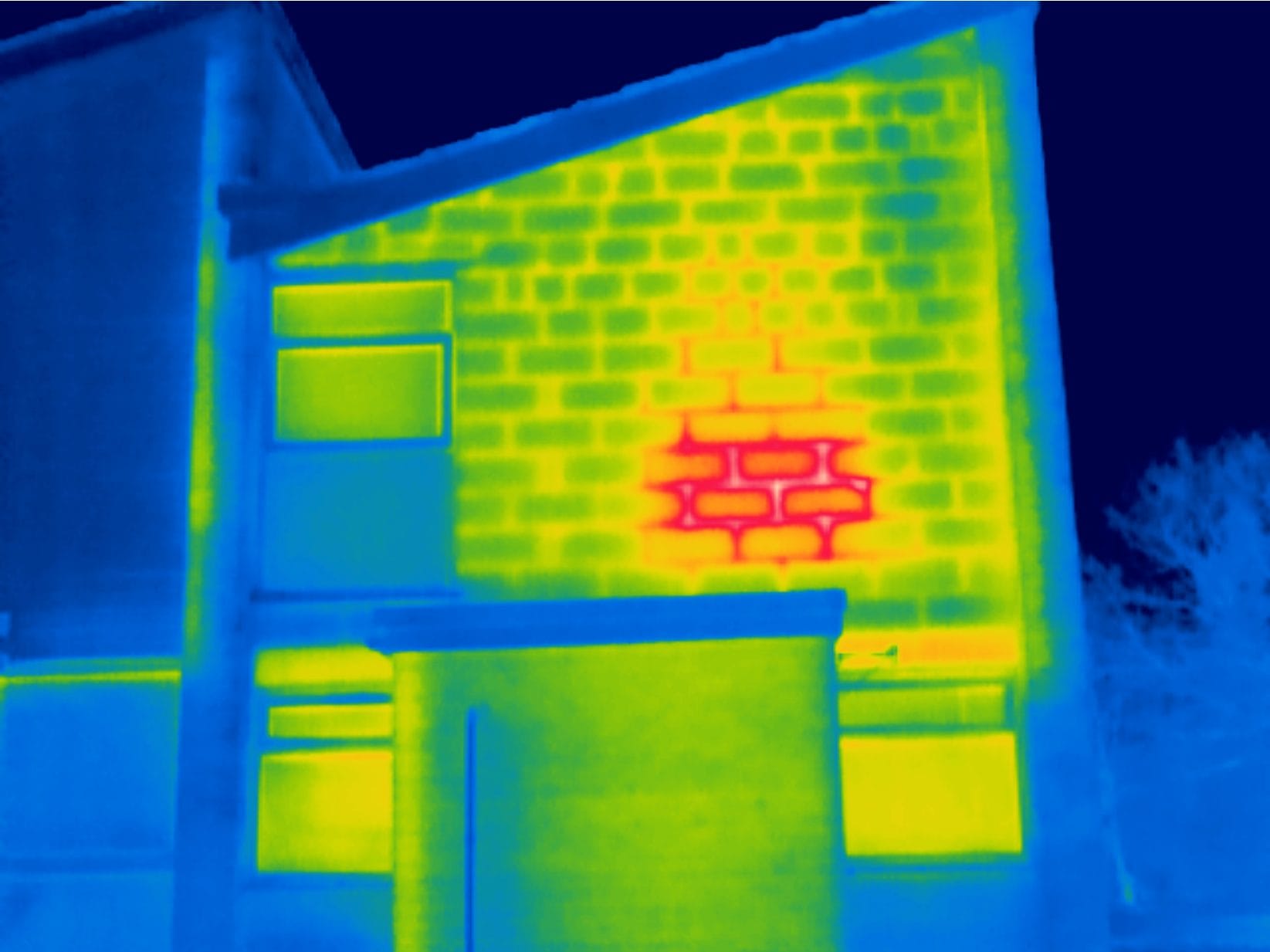
Image: External dusk thermogram showing a distinct warm brick pattern aligned with an internal radiator position. The geometry suggests conductive heat transfer through masonry where cavity insulation may be reduced or missing, contrasting with cooler surrounding areas that indicate variable insulation performance.
Insulation Irregularity, Roof Heat Loss and Cavity Wall Performance Assessment
This domestic thermography project involved a comprehensive internal and external heat loss survey of a traditional cavity masonry home using calibrated infrared imaging equipment under controlled environmental conditions.
The client reported that the property felt cold during winter and did not retain heat effectively once heating cycles ceased. The survey identified roof insulation discontinuity, variable cavity wall insulation performance to one elevation, measurable slab-to-ground heat loss, and predictable thermal bridging at structural junctions.
No intrusive inspection was undertaken. Findings were interpreted under Level 3 thermographic supervision in accordance with recognised building diagnostics standards.

domestic thermography, heat loss survey, cavity wall insulation, roof insulation issues, thermal bridging, slab heat loss, air leakage detection, building diagnostics, Level 3 thermographer, BS EN 13187
Understanding Whole-Building Thermal Performance
Thermal imaging is not about chasing isolated cold spots. It is about understanding how the building envelope behaves as a system.
In this project, the objective was not simply to confirm that heat loss existed, but to identify where and why the property was likely losing heat, and whether that behaviour was consistent with its age and construction type or indicative of insulation irregularity.
Using a controlled temperature differential of approximately 12 °C between internal and external conditions, combined with dusk external capture to eliminate solar gain, Thermography Services (UK) Ltd conducted a structured qualitative survey of:
This portfolio post outlines how professional thermographic methodology provided clarity, evidence and defensible interpretation.
How Thermography Is Used in Domestic Heat Loss Surveys
Infrared thermography is a qualitative diagnostic method recognised under BS EN 13187:1999 for the detection of thermal irregularities in building envelopes. It does not measure insulation thickness directly. Instead, it visualises temperature gradients across surfaces, allowing professional interpretation of heat transfer mechanisms.
All objects above absolute zero emit infrared radiation. Thermal cameras detect this radiation and convert it into visual temperature maps. When applied under stable environmental conditions and interpreted by a certified Level 3 thermographer, this technology can indicate:
Insulation discontinuity
Cavity wall performance variation
Thermal bridging at lintels and junctions
Slab conduction
Air leakage at frame interfaces
The key to professional thermography is not the camera alone, but the controlled methodology and interpretation under ISO 18436-7 and ISO 9712 competence frameworks.
For domestic buildings constructed in the mid-to-late twentieth century, performance limitations are often linked to:
Early cavity wall construction
Lightweight infill panels
Concrete slab floors without modern insulation
Loft insulation disturbance or compression
Thermography allows these patterns to be visualised non-intrusively.
Further reference:
BS EN 13187:1999 – Thermal performance of buildings – Qualitative detection of thermal irregularities in building envelopes – Infrared method.
Approach and Pre-Project Considerations
Environmental Control
For meaningful results, a temperature differential of at least 10 °C across the building envelope is generally required. This survey was conducted with:
Internal temperature approximately 22 °C
External temperature approximately 9.6 °C
Stable ambient conditions
No precipitation
Wind below 5 m/s
No solar loading at time of external imaging
These parameters ensured reliable comparative assessment.
Construction Context
The property is of traditional cavity masonry construction with a pitched roof finished in concrete interlocking tiles. The roadside elevation comprises facing brickwork, while front and rear upper elevations are rendered.
Based on construction era and observed behaviour, the inner leaf is likely medium-density concrete blockwork rather than lightweight aerated block. The ground floor is understood to be concrete slab construction.
Window openings included:
Standard double glazing
Lightweight lower infill panels beneath selected windows
Such infill panels are typically timber-framed with limited insulation and often perform thermally closer to glazing than masonry.
The owner advised that retrofit insulation had previously been installed to the roadside elevation, although the specification was not confirmed. This context was considered during interpretation.
Key Observations and Findings
1. Central Heating System Performance
The heating system was observed to be operating effectively. Radiators were achieving expected operating temperatures, and rooms reached comfort levels during heating cycles.
This is significant. The issue was not heat production. The issue was heat retention.
2. Roof Insulation Irregularity
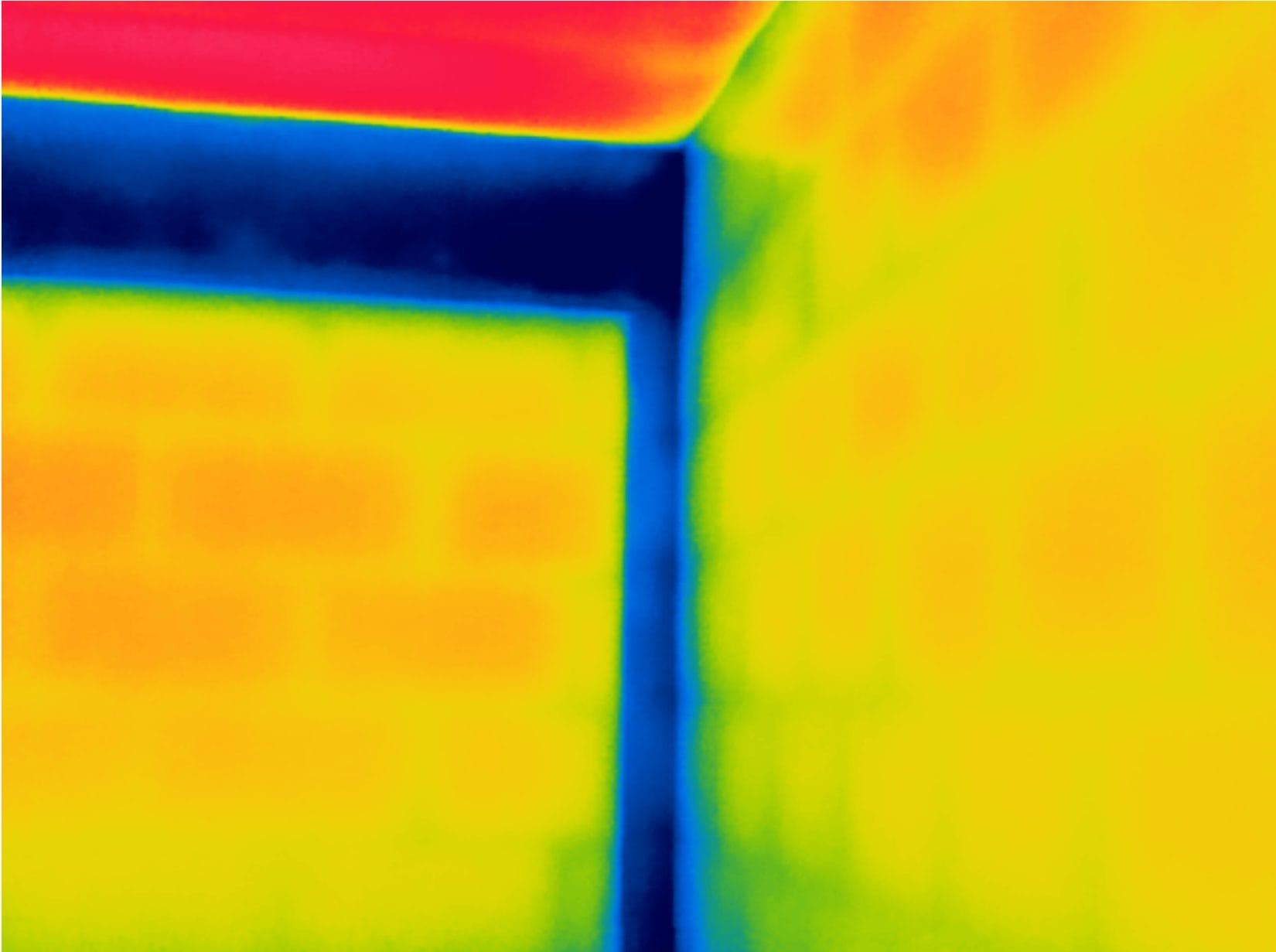
Repeated cooler bands were observed along roof slopes, aligned with rafter geometry. These bands were consistent internally and corresponded externally at roof-to-wall junctions.
The pattern is consistent with:
Potentially reduced insulation thickness
Displacement or compression of loft insulation
Localised discontinuity at eaves level
Importantly, the behaviour was geometric and repeated, not random. This supports an insulation-related interpretation rather than air movement alone.
Heat loss at the rear wall-to-roof junction spanned both upper rooms, suggesting a common insulation performance characteristic across the roof perimeter.
3. Ground Floor Slab Heat Loss
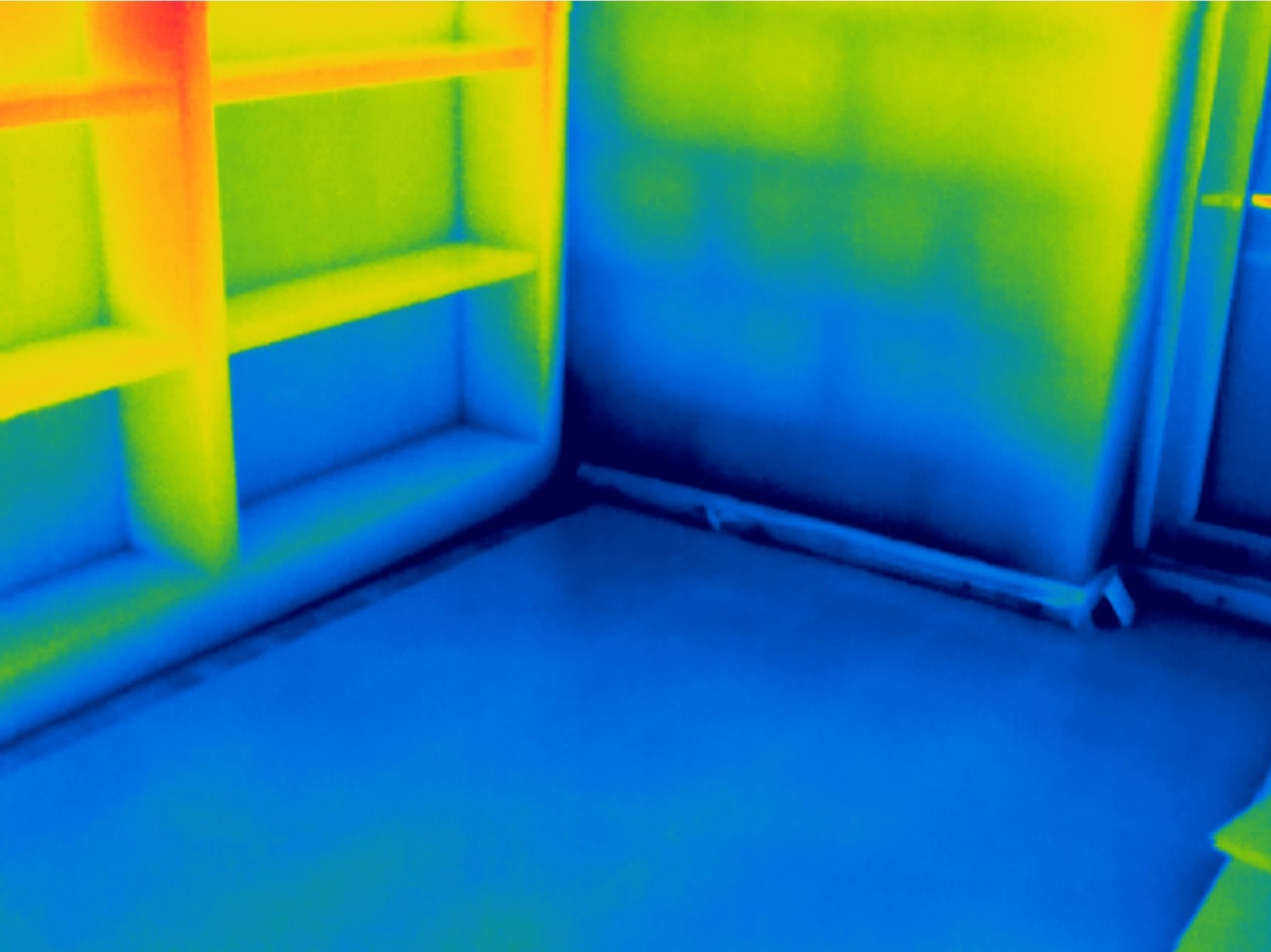
Ground floor surfaces were consistently cooler than adjacent internal partitions.
Lower wall zones demonstrated conductive heat transfer to ground. This is behaviour typically associated with:
Concrete slab construction
Absence of modern slab insulation
Perimeter edge bridging
Slab-to-ground conduction is not a defect in itself. It is characteristic of older construction. However, it contributes materially to overall heat demand and perceived cooling.
The slab behaviour was one of the more consistent and measurable findings across the property.
4. Roadside Elevation – Variable Cavity Wall Behaviour
The roadside wall displayed a diffuse, mottled thermal signature externally.
Unlike untreated masonry, where brick coursing often remains visually defined thermally, this elevation showed disrupted and irregular surface temperatures.
This pattern is consistent with retro-injected cavity insulation of variable density. The irregularity may indicate:
Settlement
Incomplete fill
Density variation
Obstruction within the cavity
By contrast, the front and rear elevations did not exhibit the same disrupted pattern. This comparative behaviour suggests the roadside elevation may have been treated independently of the other façades.
The findings do not confirm failure, but they indicate variable in-situ insulation performance.
5. Thermal Bridging at Structural Junctions
Linear horizontal temperature elevation was observed above window heads and patio doors.
This behaviour is consistent with conductive thermal bridging at lintels, where steel or concrete elements interrupt cavity insulation continuity.
The patio door lintel demonstrated a particularly clear conductive signature. The uniformity and linear nature of the anomaly support a structural interpretation rather than isolated voiding.
Wall-to-ceiling junction cooling was also observed internally, reinforcing the roof insulation narrative.
6. Air Leakage at Glazing Interfaces
Selected window and patio door frame junctions exhibited measurable perimeter temperature differentials.
Patterns were consistent with:
Localised air infiltration
Reduced reveal insulation
Seal degradation
The glazing units themselves performed broadly as expected for standard double glazing. The greater concern was perimeter interface performance rather than glass unit failure.
7. Conductive Heat Transfer at Radiator Locations
Localised external warm patches correlated with internal radiator and boiler cupboard positions.
This behaviour suggests reduced insulation resistance in those wall sections, allowing conductive heat transfer through masonry.
This is a powerful example of thermographic correlation, linking internal heat sources with external signatures to confirm fabric heat transmission pathways.
Outcome and Interpretation
The property does not exhibit a single catastrophic insulation defect. Instead, it demonstrates cumulative fabric inefficiencies typical of its construction era.
Key contributors include:
Roof slope insulation irregularity
Slab-to-ground conductive coupling
Variable cavity wall injection performance
Structural lintel bridging
Localised frame air leakage
Individually, these anomalies are moderate. Collectively, they materially affect thermal stability and heat retention. The findings are consistent with the owner’s experience of the dwelling cooling relatively quickly once heating cycles cease. Importantly, thermography allowed these behaviours to be:
Identified non-intrusively
Contextualised scientifically
Correlated internally and externally
Interpreted under Level 3 oversight
This ensures defensible, professional reporting rather than speculative diagnosis.


